
crossbencher


 1
9.5
- noun
- /ˈkrɒsˌbɛnʧə/
- Jargon
- Lord Smith sat as a crossbencher in the House of Lords for many years.
Examples
-
The crossbencher voted independently on the new bill.
-
Several crossbenchers played a crucial role in passing the new legislation.
-
As a crossbencher, she voted on each issue according to her beliefs rather than party lines.
-
Many crossbenchers support environmental policies.
-
As a crossbencher, she often voted independently of the party lines and focused on the issues that mattered to her constituents.
-
The crossbencher played a crucial role during the debate, providing alternative perspectives that neither side had considered.
-
In the House of Lords, a crossbencher can influence legislation by offering unbiased opinions that are not swayed by party politics.
Synonyms
 9
7.3
A person elected to a parliament, such as the House of Commons
 1
8.2
A person who does not choose a side in a dispute, especially in politics
How Independent

Surface Forms
Morphology
crossbencher = crossbench (semi-transparent) = cross + bench + er
The word is built from the specialized noun 'crossbench' plus '-er', but the political meaning is not fully predictable unless one knows the parliamentary term.
Etymology
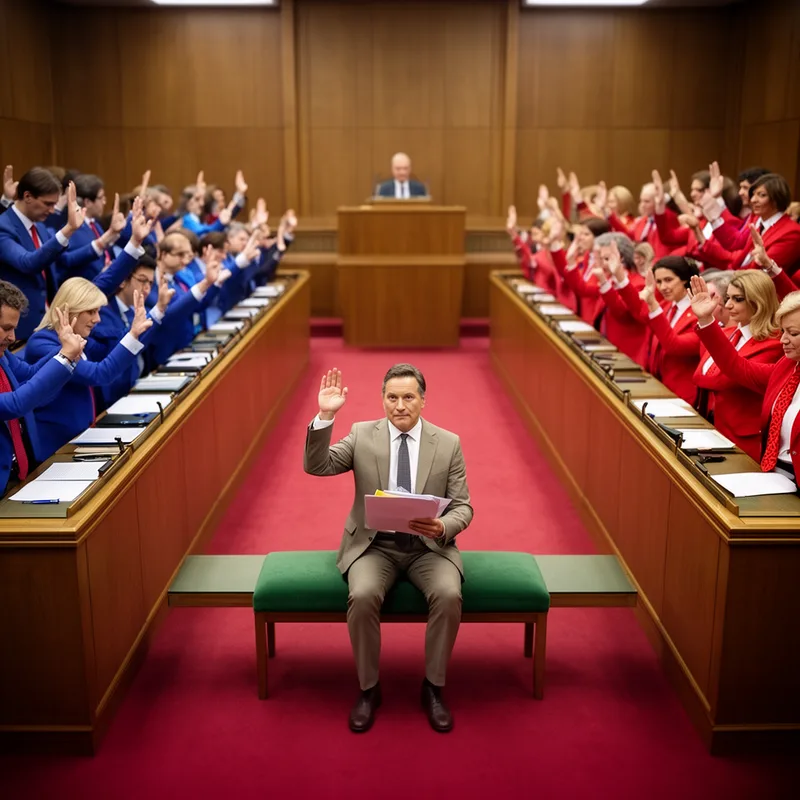
The word crossbencher comes from the parts cross- ('across') and bench ('seat'), because these members sit on benches 'across' the chamber rather than with the government or the opposition. So, a crossbencher is a member who is not on either side and often votes independently.