
to crepitate
- verb
- /ˈkrɛpɪˌteɪt/
- Dried leaves crepitate underfoot as you walk through the autumn woods.
Examples
-
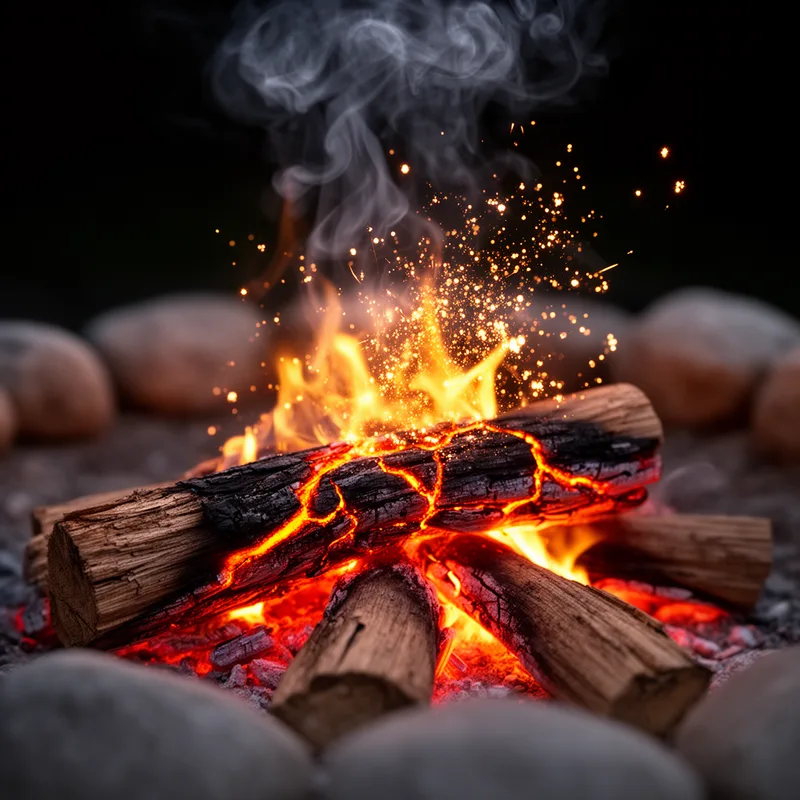
The fire began to crepitate as the new logs were added to the flames.
-
During the exam, the doctor noticed the patient's joints would crepitate when moved.
-
The fire crepitated softly in the quiet night.
-
I love to hear the leaves crepitating under my feet.
-
The fire began to crepitate as the new logs were added to the flames.
-
Dried leaves crepitate underfoot as you walk through the autumn woods.
-
The fire crepitated softly in the quiet night.
Synonyms

 90
3.2
90
3.2

To make a short sharp sound, for example when a balloon bursts
 33
2.8
33
2.8
To make short, sharp popping sounds
 25
3.7
25
3.7
To make a hissing, crackling sound when hot, as in frying
 22
3.2
22
3.2
To make a soft, dry sound when leaves or paper move together

To make small, loud cracks or pops when heated, like salts and minerals

To make a soft, short popping sound

To make a crisp rustling sound when fabric moves
How Crackling

Surface Forms
Morphology
crepitate = crepit + ate
The verb is borrowed from Latin (crepit- + -ate); the root 'crepit' is not a productive standalone English base, so learners cannot reliably derive the meaning from English component parts.
Etymology
Crepitate comes from the old Latin verb crepitare, which meant 'to rattle' or 'to make a sharp noise'. So crepitate is a word for 'to crackle' or 'to pop', like dry leaves when you walk or a fire that makes many small sharp sounds.