

crepe gardenia
- noun
- /kreɪp gɑːrˈdiːnɪə/
- Indian
- The crepe gardenia is prized for its intensely fragrant, crimped white blossoms that bloom at night.
Examples
-
The crepe gardenia is prized for its intensely fragrant nocturnal blossoms.
-
Gardeners in subtropical regions often plant the crepe gardenia for its decorative foliage and flowers.
-
At dusk, the crepe gardenia fills the garden with a sweet scent.
-
The crepe gardenia is known for its beautiful blooms.
-
I bought a crepe gardenia for my mother.
-
At dusk, the crepe gardenia fills the garden with a sweet scent.
-
Gardeners in subtropical regions often plant the crepe gardenia for its decorative foliage and fragrant flowers.
Synonyms

A tropical shrub with glossy leaves and white flowers that smell sweet and open at night
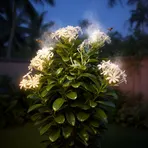
A tropical shrub with shiny leaves and scented night flowers from northern India to Thailand

A tropical shrub with shiny leaves and sweet-smelling night flowers with wavy petals

A tropical shrub with shiny leaves and fragrant flowers that open at night
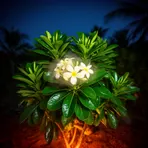
A tropical shrub with shiny leaves and sweet-smelling flowers that open at night
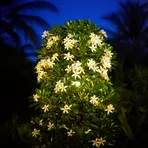
A tropical shrub with shiny leaves and fragrant flowers that open at night

A tropical shrub with glossy leaves and fragrant white, crinkled flowers

A tropical shrub with shiny leaves and white flowers that smell sweet
Surface Forms
Morphology
The phrase is a descriptive modifier+noun combination: 'crepe' denotes a crinkled texture and 'gardenia' names the shrub, so the meaning (a gardenia with crepe-like/crimped flowers) can be directly inferred from the parts. This transparent, descriptive botanical pattern is common cross-linguistically, so a B1 learner who knows both words would likely understand the MWE.
Etymology
Crepe gardenia likely gets its name from the flower's thin, crinkled petals that look like crepe fabric or paper and from the sweet-smelling white blooms called gardenias. So the name helps you picture a shrub with wrinkled white petals that often bloom at night and give off a strong 'fragrance'.

