
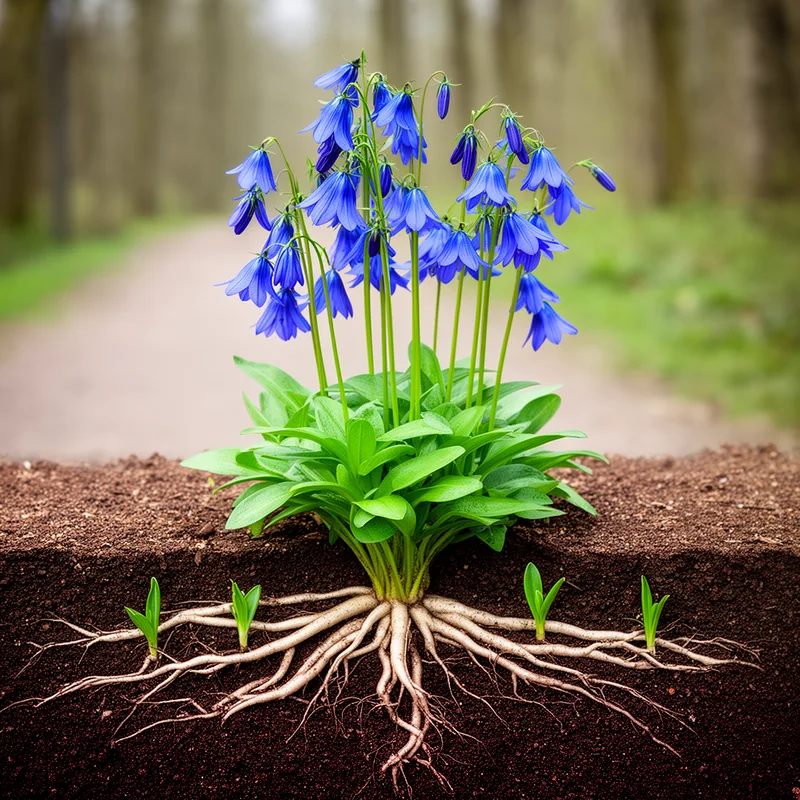
creeping bellflower
- noun
- The creeping bellflower quickly spreads through gardens because of its underground stems.
Examples
-
She planted creeping bellflower for its attractive blue blossoms, unaware how invasive it could become.
-
Clusters of creeping bellflower brightened the edge of the woodland trail.
-
The creeping bellflower blooms beautifully in the spring.
-
Have you seen the creeping bellflower in the garden?
-
In the summer garden, the creeping bellflower draped its blue flowers over the rocks.
-
The gardener admired how the creeping bellflower added a lush carpet of color to the landscape.
-
During our walk, we noticed the creeping bellflower gracefully spilling over the stone wall.
Synonyms

A European plant with purple bell-shaped flowers that can spread and be hard to remove
How Spreading


Surface Forms
Morphology
The compound is transparently built from 'creeping' (indicating a spreading, ground-hugging growth habit) and 'bellflower' (a bell-shaped flower/genus Campanula), so the overall referent — a bellflower that spreads or creeps — is directly derivable from its parts. This compositional plant-name pattern is common cross-linguistically and would be understandable to a B1 learner who knows the constituent words.
Etymology
Creeping bellflower comes from the plant's way of growing and its shape: creeping because it sends out underground stems that slowly 'creep' along, and bellflower because each blue flower looks like a small hanging 'bell'. That's why creeping bellflower refers to a garden plant that easily 'spreads' and can take over areas if not kept under control.