
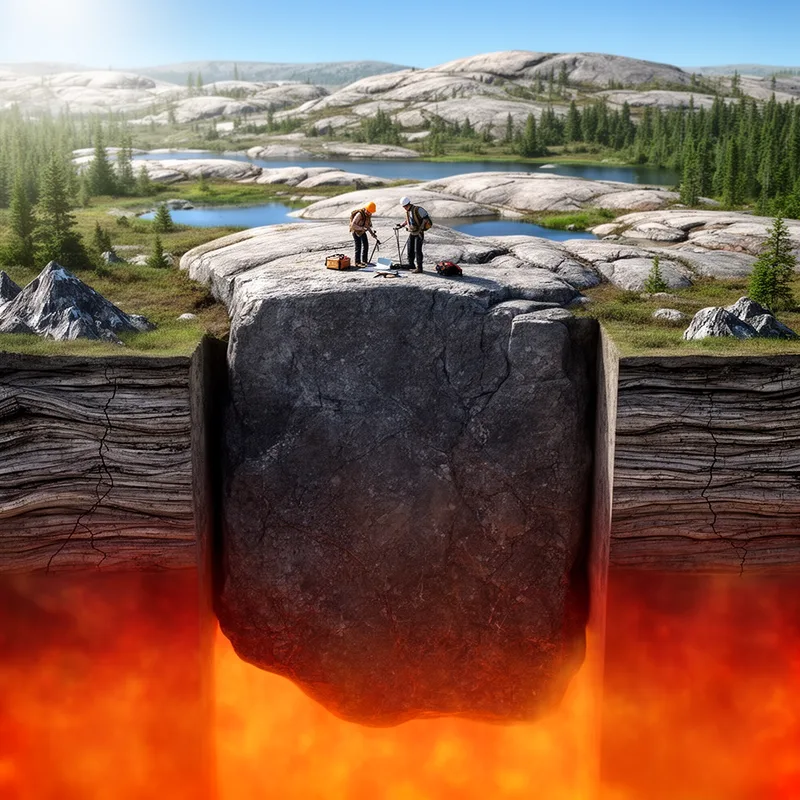
craton


 1
9.9
1
9.9
A very large stable part of a continent made of old rock
- noun
- /ˈkreɪtɒn/
- Specialized
:
cratón
- Geologists study the ancient rock formations of the craton to understand the Earth's geological history.
Examples
-
Well, cratons don't look much like birds.
Fiction book (1999) -
Burton knew that the two highest values probably came from cratons, very old rocks that make up the core of continents and are common in West Africa.
Academic text (2007) -
The SCB consists of the Yangtze Craton in the northwest and the Cathaysia Block in the southeast.
Academic text (2018) -
The Yangtze craton is one of the oldest parts of the Earth's crust, dating back to the Precambrian era.
-
Most continents are built on ancient cratons, which can provide valuable information about the Earth's past.
Surface Forms
Etymology
Craton comes from the Greek root kratos, which means 'strength' or 'power' and is the same root in democracy. So a craton is the old, strong core of a continent, the stable part that changes little over a long time.