
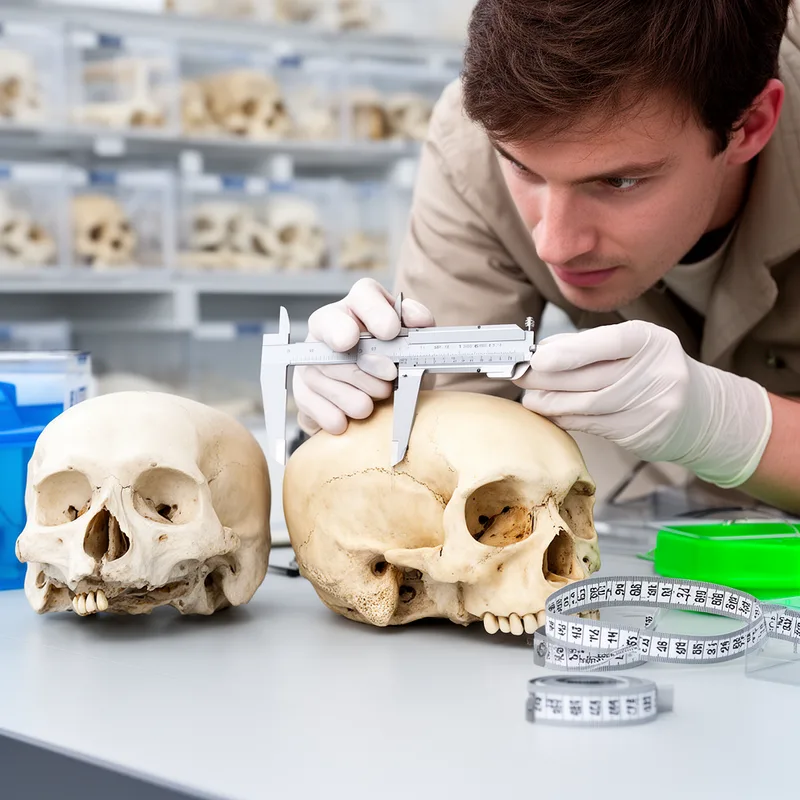
craniometry


 1
9.9
1
9.9
- noun
- /ˌkreɪniˈɒmətri/
- Specialized
 :
craniometría
:
craniometría
- The significance and importance of somatometry, cephalometry, craniometry, and osteometry in the identification of human remains have been described, and a new term 'forensic anthropometry' has been coined.
- craniometry and osteometry
Examples
-
Using craniometry, scientists have been able to analyze ancient skulls to learn about human evolution.
-
Anthropometry can be subdivided into somatometry, including cephalometry, and osteometry, including craniometry.
Academic text (2007) -
The study of craniometry helps researchers understand the differences in skull shapes among various cultures.
-
In the field of craniometry, experts measure the size and shape of skulls to provide insights into human ancestry.
Synonyms

The study of human skull size and shape to compare different groups of people

The measurement of the size and shape of the head for medical or research purposes
Surface Forms
Morphology
craniometry = cranium (transparent) = cranio + metry
The word is composed of the skull root and a measurement suffix, so the meaning 'measurement of skulls' is directly derivable.
Etymology
Craniometry comes from the Greek parts cranium 'skull' and -metry 'measure', like the everyday word meter, so it literally means 'measuring skulls' and is the study of skull size and shape.