

craning


 1
4.3
1
4.3
- noun
- /ˈkreɪnɪŋ/
- Specialized
- neck craning
Examples
-
While their fellow travelers press up to gape at Earth's newest novelty—craning and stretching, not wanting to miss a thing—these two do not.
Academic text (1992) -
Visitors to prison screenings might have triggered constant neck craning to catch a glimpse of a VIP, long-winded introductions, a more crowded than usual chapel, whispering about what was going on, or frustration by some inmates about a disruption to the usual routine.
Academic text (2016) -
The workers performed craning to lift the heavy steel beams into place on the construction site.
-
During the project, craning was implemented to transport the massive concrete blocks to the upper floors.
-
A craning operation was essential for safely moving the large equipment without any risk of damage.
Synonyms
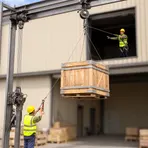
Moving heavy objects with a winch or hoist
Surface Forms
Morphology
Etymology
Craning comes from crane, the lifting machine, which was named after the long-necked bird because the machine's arm looks like a bird's neck. This is like the phrase 'to crane your neck' for stretching up, so craning means the act of 'lifting or moving heavy objects' with a crane.