

court plaster
- noun
- Archaic
- Though rarely used today, court plaster was once a standard remedy for small cuts.
Examples
-
In Victorian times, people often carried court plaster in small tins to treat minor scrapes.
-
She applied a piece of court plaster to her finger after pricking it with a needle.
-
He applied a court plaster to his cut.
-
The doctor recommended using court plasters for minor wounds.
-
After hurting his finger, he applied a piece of court plaster to keep it protected while it healed.
-
The doctor suggested using court plaster for small cuts instead of traditional bandages.
-
She carefully placed a court plaster over the scrape to ensure it stayed clean and dry.
Synonyms
 5
1.0
5
1.0

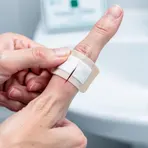
A small sticky piece of cloth or plastic used to cover a cut
 3
2.8
3
2.8
A piece of clean cloth placed over a wound to protect it
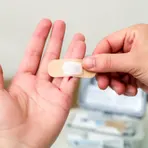
A small sticky bandage put on a small cut to protect it
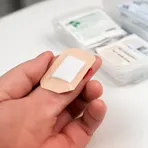
A small sticky bandage that covers and protects minor cuts
How Protective

Surface Forms
Morphology
court + plaster
The head noun 'plaster' clearly signals a small adhesive bandage, so a B1 learner who knows 'plaster' would likely infer this refers to a type or kind of bandage. However, the modifier 'court' is historically conditioned and semantically opaque (it does not transparently indicate the material or function), so the full, specific sense is not predictable from the parts.
Etymology
Court plaster got its name from small, neat sticky patches used at royal courts long ago. The name links court, meaning royal or fancy, and plaster, meaning a sticky patch, and these were made from fish glue on silk to hide and heal small cuts. That's why court plaster now means a small sticky patch for minor wounds.