
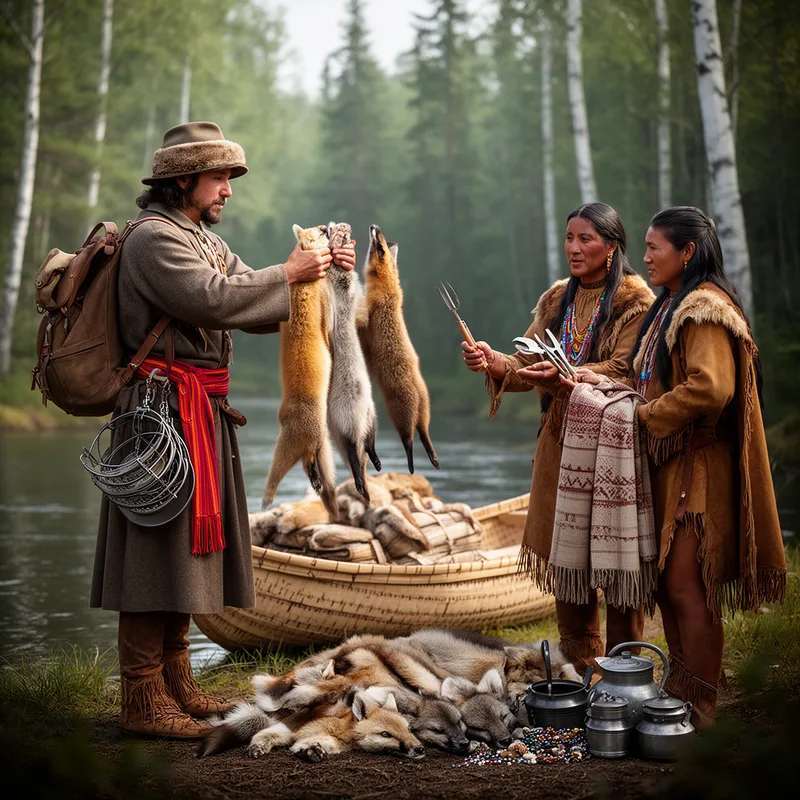
coureur de bois
- noun
- /kuːrˈɜːr də bwɑ/
- Archaic
- The coureur de bois ventured deep into the forests to trade furs with Indigenous peoples.
Examples
-
The French coureurs de bois, "runners of the woods," traded and trapped for furs and lived with the natives to trade European commercial goods for furs.
Academic text (1996) -
A coureur de bois would often travel long distances by canoe to reach trading posts for valuable furs.
-
Indian hospitality "surpasses all that which is general among the Europeans," wrote Nicholas Perrot, a coureur de bois, trader, and agent of the Canadian government who lived in New France among Indians for over thirty years.
Academic text (2001) -
Many coureurs de bois established relationships with Native American tribes to facilitate fur trading.
Synonyms
 11
6.5
11
6.5

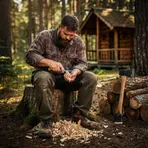
A man who lives in the woods and makes things from wood

 1
9.6
1
9.6
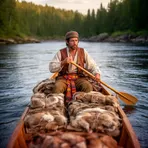
A canoe traveler who carried furs across long rivers in early Canada
Surface Forms
Morphology
coureur + de + bois
The literal parts (coureur = runner, de = of, bois = woods) yield a plausible literal gloss like 'runner of the woods' or woodsman, so some basic occupational sense is inferable. However the specific historical meaning (a French-Canadian fur trapper/trader and its cultural-historical nuances) and the fact this is a French loanword make the full sense unpredictable for a B1 learner, so it is only partially transparent.
Etymology
Coureur de bois comes from the French words coureur ('runner') and bois ('woods') and may come from the image of a person moving quickly through the forest to trap animals and trade furs. That's why it came to mean a French-Canadian woodsman or fur trapper who travelled and traded in the wild.