
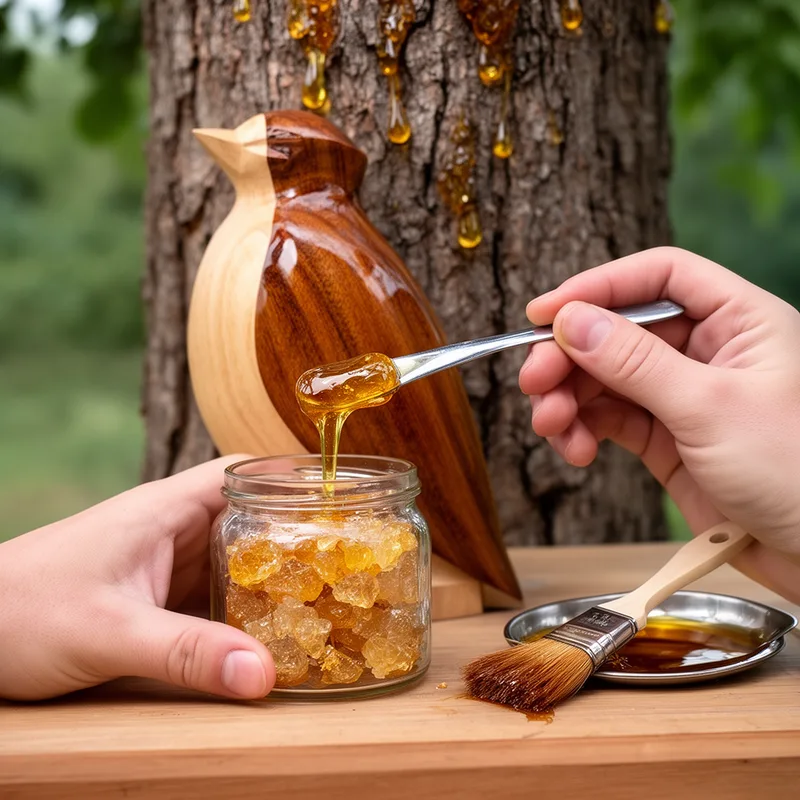
courbaril copal
- noun
- Specialized
- The craftsman used courbaril copal to give the wooden sculpture a glossy finish.
Examples
-
Traditional varnishes often include natural ingredients, such as courbaril copal.
-
Collectors prize certain pieces of jewelry made with fossilized courbaril copal.
-
The artisan used courbaril copal to finish the wooden sculpture.
-
Many artists prefer courbaril copal for its natural properties.
-
The craftsman used courbaril copal to give the wooden sculpture a glossy finish.
-
Collectors prize certain pieces of jewelry made with fossilized courbaril copal.
-
Traditional varnishes often include natural ingredients, such as courbaril copal.
Synonyms
A hard tree resin with a strong smell used to make varnish and polish wood
Surface Forms
Morphology
The compound is a transparent noun–noun combination: 'courbaril' names a specific tree and 'copal' denotes a resin, so a learner who knows both constituents can infer it is the resin from the courbaril tree. This compositional pattern (tree + resin) is straightforward and follows common cross-linguistic compounding, making the meaning predictable to B1 learners who know the parts.
Etymology
The noun courbaril copal comes from the sticky sap of the courbaril tree; when this sap hardens it becomes copal, a clear 'resin' that craftsmen use for 'varnish' and glue. So, the name means the 'resin' used to give wood a glossy finish.

