
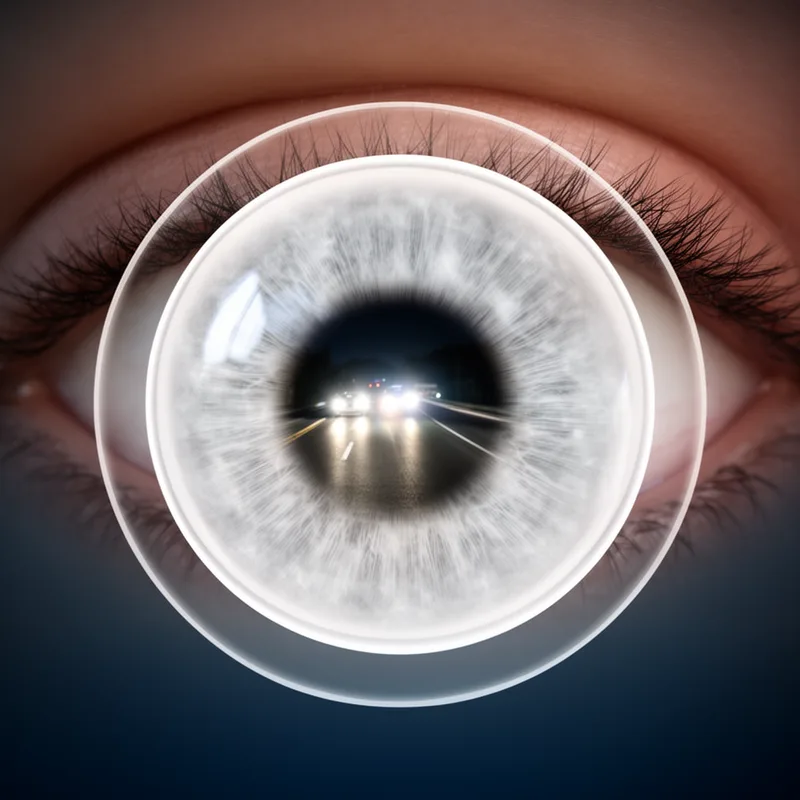
cortical cataract
- noun
- /ˈkɔrtɪkəl ˈkætəˌrækt/
- Specialized
- Researchers concluded there was a link between cortical cataracts, which are the most common form of cataracts, and Alzheimer-related conditions of brain degeneration.
Examples
-
Many elderly patients are diagnosed with cortical cataracts that cause blurriness in their vision.
-
Those findings support a role for vitamin C in reducing the risk of cortical cataracts in women younger than 60.
Academic text (2003) -
Cortical cataract can lead to significant vision impairment if left untreated.
-
The doctor explained that a cortical cataract forms when the lens cortex becomes opacified.
Synonyms

 20
5.2
20
5.2

A cloudy lens in the eye that makes vision blurry
Surface Forms
Morphology
The term is compositional: 'cortical' specifies the location (the cortex or outer layer) and 'cataract' denotes clouding of the eye lens, so the combined meaning (clouding in the lens cortex) is directly derivable from its parts. Although medical, the structure is transparent and parallels similar compounds across languages, so a learner who knows both constituents would understand the MWE.
Etymology
Cortical cataract combines cortical, meaning the 'outer part', and cataract, a 'clouding' of the lens. Imagine the edge of a clear window turning cloudy in a ring or spoke pattern; that's why a cortical cataract causes glare and trouble seeing.