
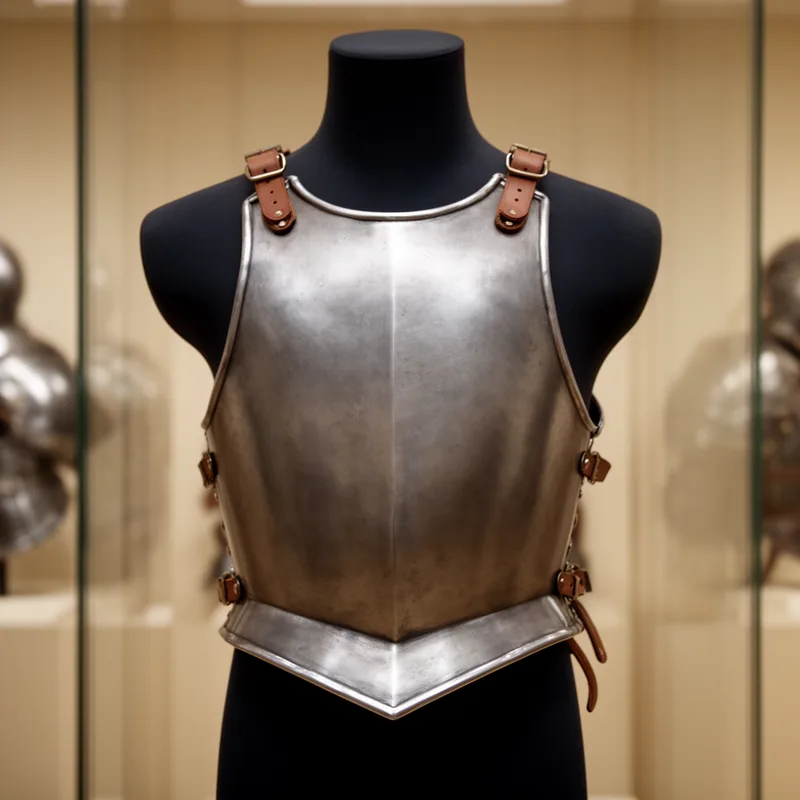
corslet
- noun
- /ˈkɔrsˌlɛt/
- Archaic
- Many ancient warriors used corslets for protection.
Examples
-
Historical reenactors often wear a replica corslet as part of their costumes.
-
The museum displayed a 16th-century corslet alongside other medieval armor.
-
The knight donned his corslet before heading into battle.
-
The knight wore a shiny corslet during the battle.
-
The knight donned his corslet before entering the battle, ensuring his torso was well-protected.
-
To shield himself from arrows, the warrior wore a sturdy corslet that covered his chest and back.
-
In the museum, an ancient corslet displayed intricate designs and was once worn by a famous general.
Synonyms
A piece of armor that covers the chest and back
How Protective

Surface Forms
Morphology
corslet = cors (semi-transparent) = cors + let
The diminutive suffix '-let' is recognizable, but the root 'cors' (meaning 'body') is archaic/rare in modern English so the connection to 'body armour' is not fully obvious to learners.
Etymology
Corslet comes from parts that mean 'body' (cors-) and 'small' (-let). It originally meant a 'little body' covering, so it became the name for a small piece of body armour that covers the chest and back. It is like the word corset, which also comes from the same 'body' root.

