
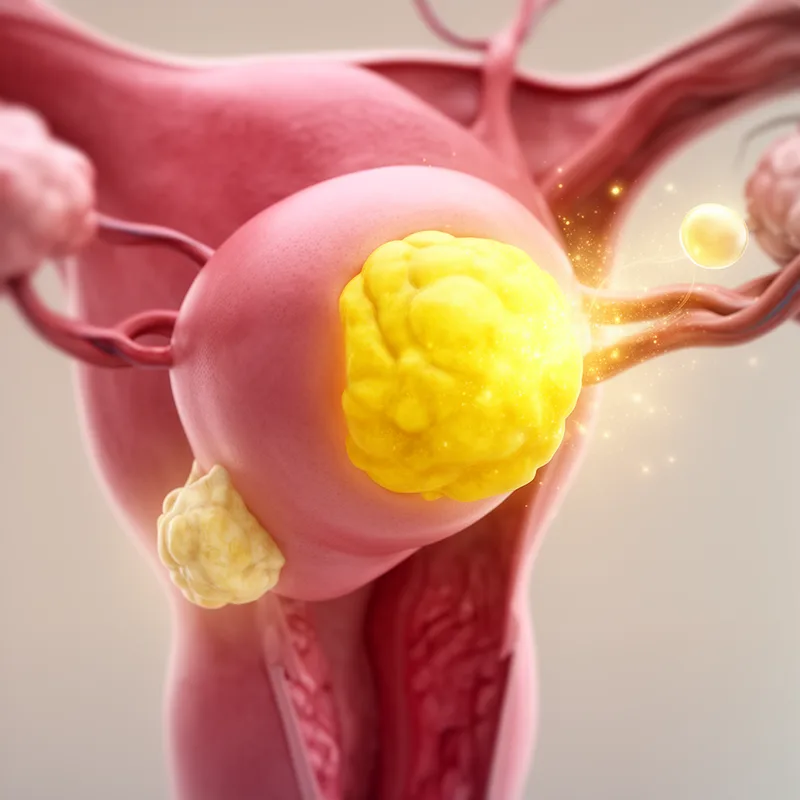
corpus luteum


 1
7.6
1
7.6
- noun
- /ˈkɔr.pəs ˈluː.ti.əm/
- Specialized
- To synchronize, animals with corpus luteum were treated with a prostaglandin injection (2cc, Dalmazine).
Loading YouTube…
Watch on YouTubeThe follicle transformed into a structure known as the corpus luteum.
- The follicle transformed into a structure known as the corpus luteum.
Examples
-
After ovulation, the follicle develops into a corpus luteum that plays a crucial role in hormone production.
-
Dr. M: It looks like you have a corpus luteum on your left ovary.
Blog text (17) -
In the post-ovulatory phase, the follicle transforms into the corpus luteum.
Academic text (2015) -
Surgical removal of the corpora lutea causes premature oviposition in all oviparous lizard species examined.
Academic text (1993) -
Progesterone is not only secreted from the corpus luteum; the reptilian adrenal is capable of synthesizing large quantities of this hormone.
Academic text (1993) -
The corpus luteum forms within the ovary and is essential for maintaining early pregnancy.
-
If pregnancy does not occur, the corpus luteum eventually degenerates after a few weeks.
How Developed
- Specialized
1
7.6

- Specialized
- Specialized
15
5.1
- Specialized
25
6.8
Surface Forms
Morphology
corpus + luteum
The term is compositionally built from Latin corpus (body) + luteum (yellow), so a learner who knew both constituents could infer a literal sense of a 'yellow body' and recognize it as an anatomical structure; related forms exist in many languages (e.g., French corps jaune, Spanish cuerpo lúteo), supporting partial predictability. However, the precise technical meaning — a hormone-producing ovarian structure formed after ovulation — is specialized and not fully derivable from the literal constituents, so comprehension would be incomplete without prior exposure.
Etymology
Corpus luteum comes from the Latin words corpus 'body' and luteum 'yellow'. It is a small yellow body that forms in the ovary after an egg is released and makes hormones to help the body prepare for pregnancy, so the name fits what it looks like and what it does.