

coronoid process
- noun
- /ˈkɔrəˌnɔɪd ˈprɑːsɛs/
- Specialized
- Regan and Morrey (1989) have classified coronoid process fractures as follows:
Examples
-
In anatomy classes, students learn about the function of the coronoid process in the human body.
-
The coronoid process is crucial for the attachment of muscles that flex the forearm.
-
Type II involves 50% of the coronoid process and may be associated with an unstable elbow.
Academic text (2003) -
Type III is a fracture of the entire coronoid process.
Academic text (2003) -
The coronoid process helps to stabilize the joint where the ulna meets the elbow.
Synonyms
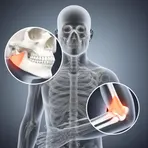
A sharp triangular bone point on the lower jaw or the forearm near the elbow

A triangular bone part that sticks out from the jaw or forearm bone
Surface Forms
Morphology
Both constituents directly denote a bony projection: 'coronoid' refers to a triangular bony projection for muscle attachment and 'process' denotes a physical projection or prominence. The compound is fully compositional and follows standard anatomical naming, so a learner who knows the constituent meanings can reliably infer the MWE meaning.
Etymology
Coronoid process comes from Greek: coronoid means 'crown' or 'beak' and process means 'a part that sticks out'. The name fits because the small, sharp, triangle-shaped bit of bone on the jaw or forearm looks like a tiny crown or hooked beak, so it is used for that bone projection.

