
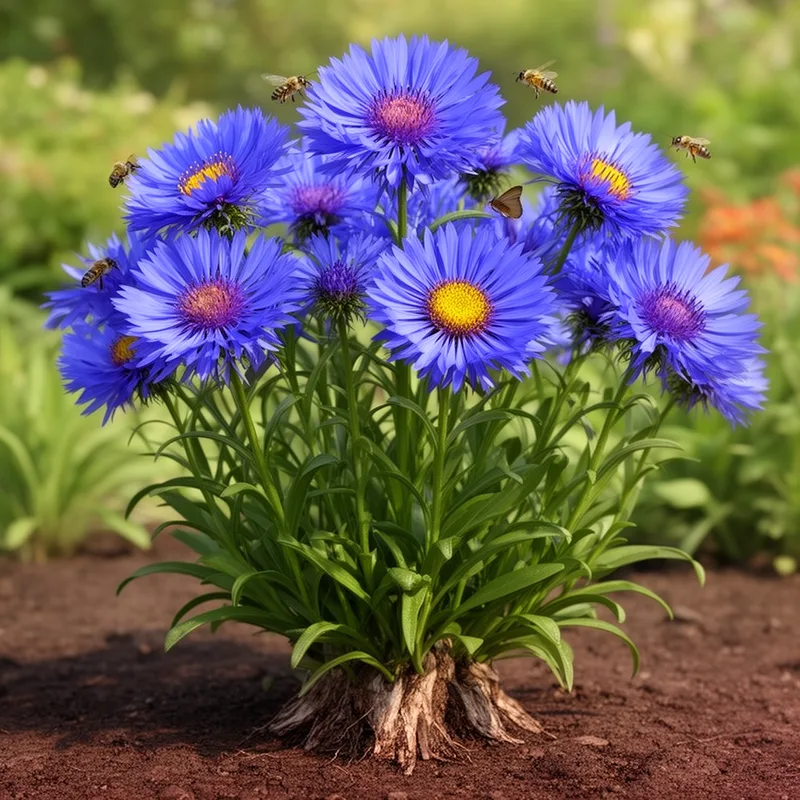
cornflower aster
- noun
- /ˈkɔrnˌflaʊər ˈæstər/
- US
- The cornflower aster brightened the garden with its vibrant blue blossoms in late summer.
Examples
-
Many pollinators are attracted to the large heads of the cornflower aster.
-
Botanists have noted that the cornflower aster is native to the southeastern United States.
-
The cornflower aster blooms beautifully in the summer.
-
You should plant a cornflower aster in your garden.
-
The cornflower aster is known for its striking blue flowers that attract butterflies.
-
In the wildflowers of the southeastern United States, the cornflower aster stands out with its large, vivid blooms.
-
To add color to your garden, consider the cornflower aster, which thrives in sunny conditions.
Synonyms
A tall plant that comes back each year with large blue flowers in the southeastern United States
A perennial garden plant from the southeastern United States with large blue daisy-like flowers
Surface Forms
Morphology
The noun is a straightforward compound of two plant names: 'cornflower' and 'aster', so its referent (a type of aster associated with cornflower-like blue blossoms) can be directly inferred from the constituents. Plant-naming compounds are a common and predictable composition pattern cross-linguistically, so a B1 learner who knows both words would readily understand the meaning.
Etymology
Cornflower aster comes from two simple images: cornflower because bright blue flowers were often seen in corn fields, and aster, a word meaning 'star', for its star-like flower head. So, the name describes a blue, star-shaped flower that grows near corn.

