
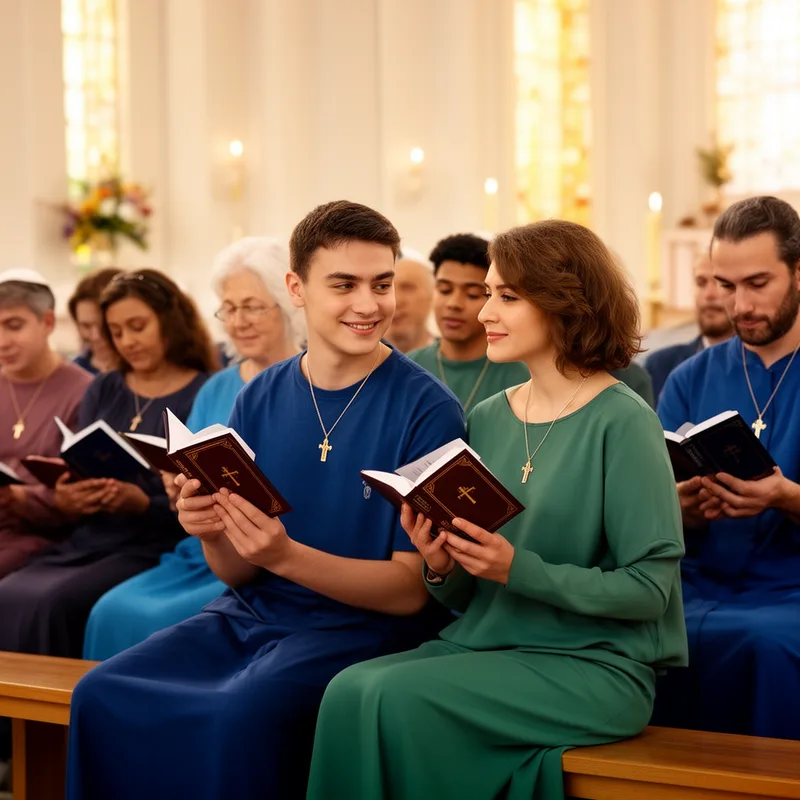
coreligionist
 1
8.9

- noun
- /ˌkɔːrɪˈlɪdʒənɪst/
- During the religious festival, thousands of coreligionists gathered to celebrate their faith together.
Examples
-
Within the discourse of the church, La'ie was a gathering place, a community where coreligionists could practice their faith without persecution.
Academic text (2008) -
Being coreligionists and co-villagers did not mean that the bond of trust was taken for granted.
Academic text (2005) -
What is particularly telling, then, is not the divides that separate African Muslims from their coreligionists.
Academic text (2009) -
Many of their coreligionists reside in small towns near the Canadian-United States border and in Vancouver suburbs.
Academic text (2006) -
41 laymen, editors, and clergy repeatedly called upon their coreligionists to organize in self-defense.
Academic text (1991) -
Ironically, several days before he was kidnapped, Ibrahim told the press that "Christians in Syria are not being targeted like their coreligionists in Iraq."
Academic text (2014) -
Catholics also chronicled a list of prominent coreligionists who had served America well, including Lord Baltimore, Lafayette, John Carroll, and Chief Justice Roger B. Taney.
Academic text (1991) -
The members of the congregation shared their beliefs and supported each other as coreligionists.
-
She found comfort in the company of her coreligionists during difficult times.
Surface Forms
Morphology
coreligionist = religionist (transparent) = co + religion + ist
Formed by adding the productive prefix 'co-' (meaning 'together/with') to 'religionist', yielding 'a fellow adherent'; the components map directly to the sense.
Etymology
The word coreligionist breaks into co- meaning 'together', religion, and -ist meaning 'person'. So a coreligionist is someone who shares the same faith.