

coral-root bittercress
- noun
- UK
- She studied the distinctive knotted roots of the coral-root bittercress for her botany assignment.
Examples
-
The damp woods were filled with coral-root bittercress, adding a touch of green to the forest floor.
-
Coral-root bittercress thrives in shaded areas near streams in its native habitat.
-
The coral-root bittercress thrives in wet environments.
-
I found a coral-root bittercress near the stream.
-
The coral-root bittercress grows abundantly in the moist soil by the riverbank.
-
In the spring, the coral-root bittercress flowers attract various pollinators in the shaded forest.
-
You can often spot the coral-root bittercress in damp, grassy areas where it thrives.
Synonyms

A European flowering plant with knotted white roots and clusters of pale purple flowers

A woodland plant from Europe with white flowers and a knotted bulb-shaped root

A small European wild plant with knotted white roots that grows in damp woods

A European plant with white flowers and knotted white roots that grows in moist shade
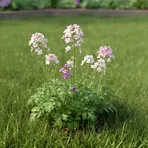
A small wild plant with divided leaves and tiny white, pink or purple flowers often in lawns
Surface Forms
Morphology
coral-root + bittercress
This is a transparently descriptive compound: 'coral-root' describes the root (coral-like) and 'bittercress' identifies the plant as a cress with bitter quality, so the overall meaning (a cress-family plant with a distinctive root) is directly inferable from the parts. Descriptive plant names follow regular compositional patterns cross-linguistically, so a B1 learner who knows the constituent words would be able to grasp the general meaning.
Etymology
Coral-root bittercress gets its name from how the plant looks and tastes: the knotted white root looks like pale coral, so people called it coral-root, and the small leaves are a kind of cress that taste a little 'bitter', so they added bittercress. So the name helps you picture the knotted root and remember this damp place plant.

