
coprostanol
- noun
- /ˌkɒprəˈstænɒl/
- Specialized
- When coprostanol is observed in environmental sediment, it is considered to be from fecal sources only, while the summation of cholesterol and cholestanol represents sewage and non-sewage sources.
- coprostanol and 24-ethylcoprostanol
- coprostanol and dihydrocholesterol
Examples
-
Coprostanol and 24-ethylcoprostanol are generally present at a ratio of approximately 3:1, with individual concentrations greater than 1 g/g dry weight in feces. Total sterol content in human feces ranges from 3 to 9 g/g dry weight.
Academic text (2006) -
Work by Leeming and Nichols (1996) has demonstrated the potential of utilizing 5-cholestan-3-ol (coprostanol) as a key biochemical marker.
Academic text (2006) -
In many environmental and fecal samples, 24-ethyl coprostanol appears as a major peak (Figure 2).
Academic text (2006) -
Lagoon slurries contain coprostanol and dihydrocholesterol as the primary sterols, while sitosterol and cholesterol are relatively minor components.
Academic text (2006) -
Coprostanol, cholesterol, dihydrocholesterol (cholestanol), stigmasterol, sitosterol, and stigmastanol were identified and quantified by the GC/MS method.
Academic text (2006) -
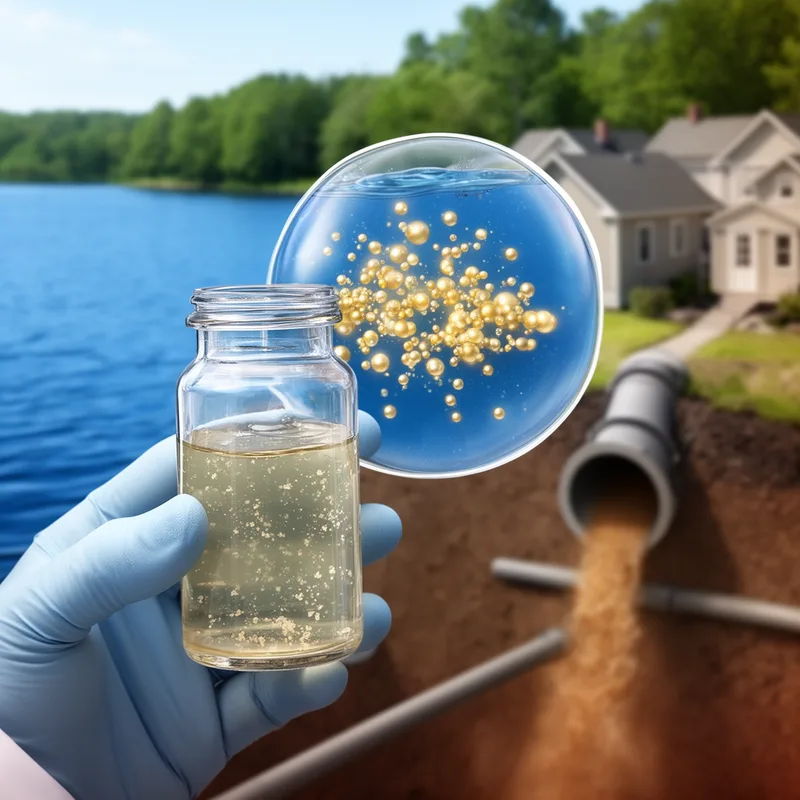
Coprostanol is commonly used in environmental studies to detect coprostanol levels in water samples.
-
The presence of coprostanol in soil can indicate nearby human waste disposal, making it a useful marker for sewage contamination.
-
Scientists analyze coprostanol levels in fecal matter to track human influence on the surrounding environment.
Surface Forms
Morphology
coprostanol = stanol (opaque) = copro + stanol
Both elements are technical combining forms (copro- 'feces' and the chemical term 'stanol'), so the meaning is not derivable by average learners.
Etymology
Coprostanol comes from the Greek root copro- meaning 'dung' and the ending -stanol, which shows it is a fat-like chemical related to cholesterol. So coprostanol is a 'dung' form of cholesterol made during digestion, and that is why scientists test for it to find human sewage.

