
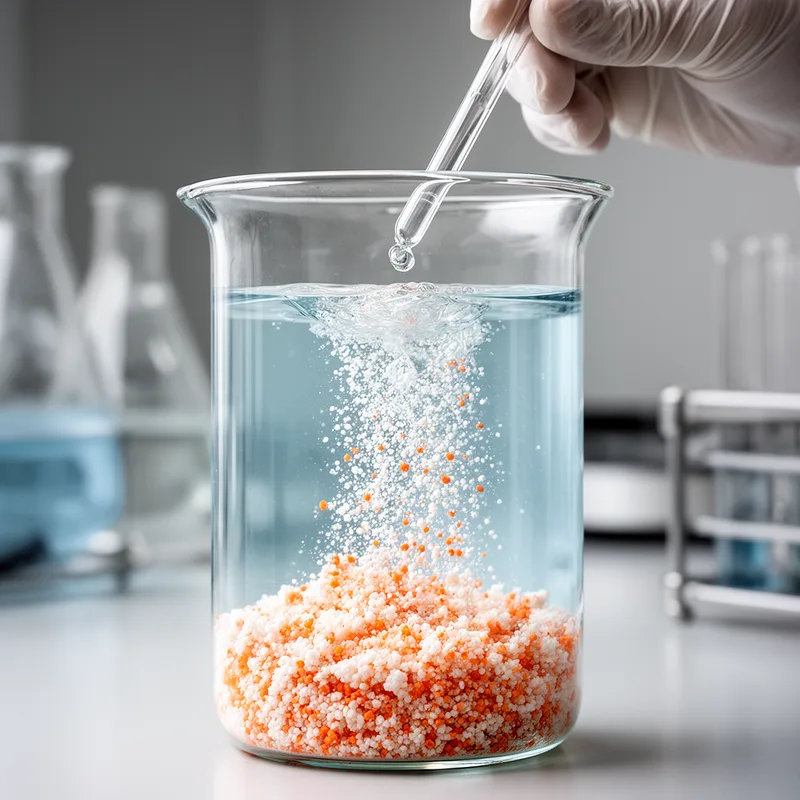
coprecipitation
- noun
- /ˌkoʊprɪsɪpɪˈteɪʃən/
- Specialized
- The coprecipitation of minerals from the solution increased the yield of the final product.
Examples
-
Purification of DNA directly from soil has yielded variable results, often complicated by the coprecipitation of humic polymers that impede subsequent DNA manipulation (Kluepfel 1993).
Academic text (1995) -
The results showed that the coprecipitation of DNA-lipoplexes resulted in the highest transfection efficiency in all groups.
Academic text (2018) -
It was believed that coprecipitation of the DNA-lipoplexes into biomimetically nucleated apatite resulted in better spatial distribution, higher stability, and higher transfection efficiency of DNA delivery.
Academic text (2018) -
During the experiment, researchers observed the coprecipitation of several compounds at different temperatures.
-
The coprecipitation process allowed multiple substances to be extracted together from the mixture.
Surface Forms
Morphology
coprecipitation = precipitation (transparent) = co + precipitation + co
Formed by the productive prefix 'co-' meaning 'together' added to the noun 'precipitation', so the sense 'precipitate together' is directly inferable though it is a technical term.
Etymology
The word coprecipitation combines co- ('together') and precipitation ('falling out', like rain). Think of tiny particles 'falling' out of a liquid at the same time, which is exactly what coprecipitation means in chemistry.

