
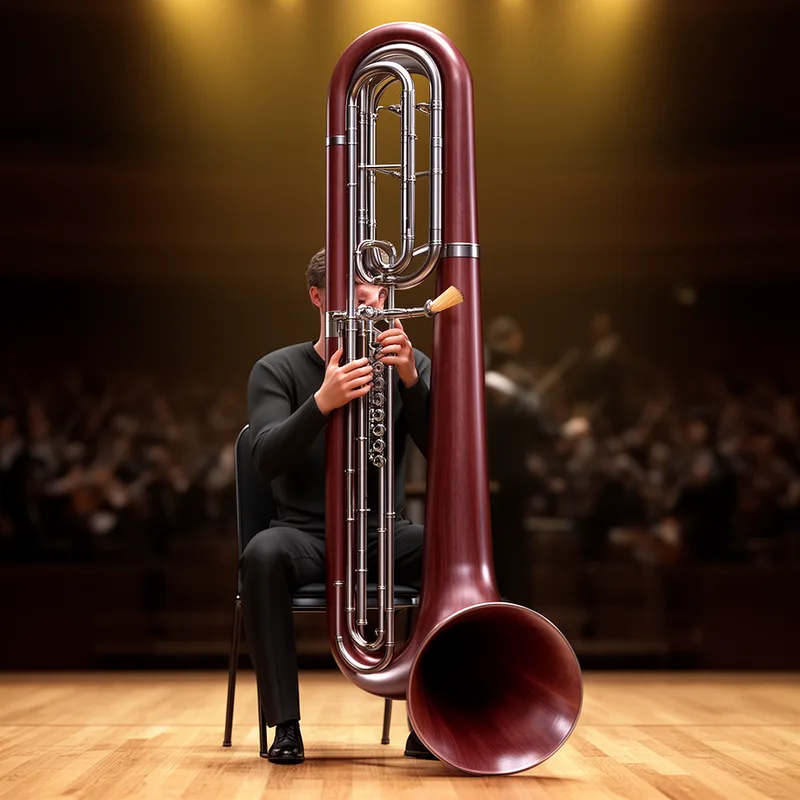
contrafagotto
- noun
- /ˌkɒntrəˈfɑːɡətoʊ/
- Specialized
- The orchestra featured a deep, resonant sound from the contrafagotto during the symphony's final movement.
Examples
-
The composer wrote a part for contrafagotto to give the piece additional depth and darkness.
-
A contrafagotto produces a rich, deep sound.
-
He specialized in rare instruments, including the contrafagotto and the English horn.
-
The orchestra featured a contrafagotto in the symphony.
-
The orchestra featured a deep, resonant sound from the contrafagotto during the symphony's final movement.
-
The composer wrote a part for contrafagotto to give the piece additional depth and darkness.
-
He specialized in rare instruments, including the contrafagotto and the English horn.
Synonyms

A large wind instrument like a bassoon that plays notes an octave lower
A large woodwind instrument like a bassoon that sounds one octave lower
How Low
- Specialized

- Specialized


 1
6.1
1
6.1
- Specialized
13
5.0
Surface Forms
Morphology
contrafagotto = contra + fagotto
The word is a direct loan from Italian (contra + fagotto); the root 'fagotto' is not a productive English word, so English learners cannot reliably derive the meaning from its parts.
Etymology
Contrafagotto comes from Italian parts contra- 'below' and fagotto 'bassoon', and the English word bassoon names the same instrument. So a contrafagotto is the 'lower' bassoon, which is why it is very large and makes the deepest sound in the woodwind family.