
continuous creation theory
- noun
- /kənˈtɪn.ju.əs krɪˈeɪ.ʃən ˈθɪə.ri/
- Archaic
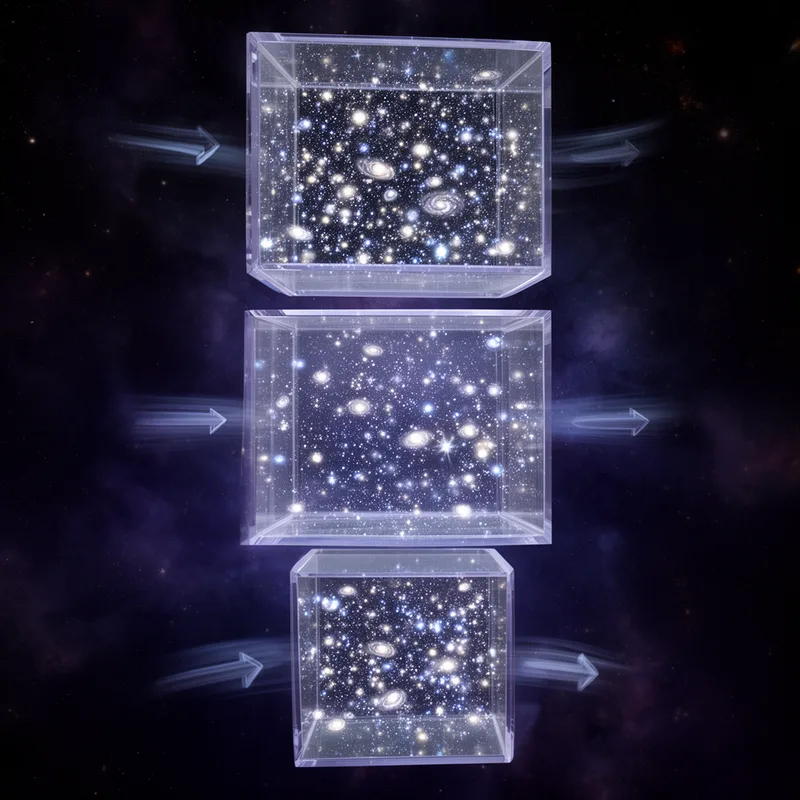
- The continuous creation theory posits that the universe generates matter to maintain a consistent density as it expands.
Examples
-
The continuous creation theory suggests that new matter forms as the universe expands.
-
Although the continuous creation theory was influential, most scientists now favor the Big Bang theory.
-
Many physicists once supported the continuous creation theory as an alternative to the Big Bang model.
-
The continuous creation theory suggests that new matter is constantly generated.
-
Many scientists support the continuous creation theory for explaining the universe.
-
According to the continuous creation theory, matter is created continuously to fill the gaps left by expanding galaxies.
-
The idea behind the continuous creation theory is that as galaxies drift apart, new matter is produced to keep the universe balanced.
Synonyms

An idea that the universe stays the same overall because new matter is made as galaxies move apart
Surface Forms
Morphology
continuous + creation + theory
The noun phrase is compositionally transparent: 'continuous' (without interruption) + 'creation' (the act of making or generating) + 'theory' (an explanatory model) yields 'a theory that creation happens continuously', which a B1 learner who knows the constituents can infer. While the detailed cosmological implications are technical, the basic propositional content follows normal compounding patterns and is cross-linguistically accessible.
Etymology
Continuous creation theory comes from the clear image of new matter being made all the time as the universe grows, like filling gaps as space stretches. Scientists used that image to say the universe keeps the same 'average amount of matter', so the name refers to the idea of 'continuous creation', making matter to fill the empty space.

