
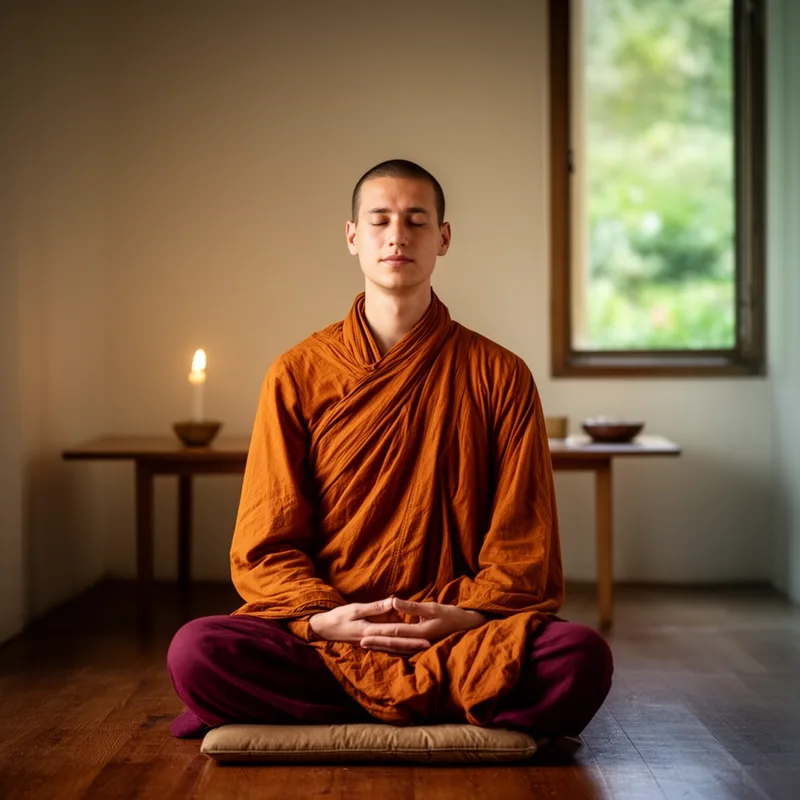
contemplative


 1
6.7
1
6.7
- noun
- /kənˈtɛm.plə.tɪv/
- Contemplatives seek a deeper understanding of themselves and their faith.
Examples
-
It presumes considerable ascetic training, so that the contemplative is no longer attached to objects and nature, but can instead discern their essential natures and their symbolic relation to God.
Academic text (1994) -
Humility is what contemplatives throughout the ages have identified as essential for all personal advancement (intellectual, spiritual, emotional).
Blog text (6) -
"The entire life of a good contemplative is nothing less than holy desire.
Fiction book (1993) -
In religious language, this turn in the contemplative's development may be called "the resurrection of the body."
Academic text (1990) -
The contemplative's movement toward God, though always in God, who is above him, is both inward and outward.
Academic text (2007) -
From Quakers to Reformers to Pietists to Contemplatives, they all encourage us in the way of meditative prayer.
Blog text (2) -
The occupation of a compassionate contemplative, Merton announces, is not to castigate but to find the hidden wholeness of self that will unite him with others.
Academic text (1993) -
Bonaventura places the births of Joseph and Benjamin in the Final Church Triumphant, which is characterized as a church or order of contemplatives living in transcendent peace and wisdom, the ecclesia contemplativa.
Academic text (2006) -
A contemplative often spends long hours meditating in solitude.
-
As a contemplative, she dedicates herself to deep spiritual reflection.
Synonyms
 4
3.7
4
3.7
A person who sits quietly and focuses on breathing to relax
 1
9.9
1
9.9
A person who seeks inner peace through silent prayer and calm thinking
 1
7.5
1
7.5
A person who thinks deeply about ideas or problems

A person who spends time thinking quietly and deeply

A person who spends time quietly thinking about life

A person who often thinks quietly and carefully about things

A person who thinks deeply about ideas or problems

A person who often thinks deeply about their own thoughts and feelings
How Contemplative

Surface Forms
Morphology
contemplative = contemplative (semi-transparent) = contemplate + ive
The noun is a substantivized use of the adjective 'contemplative', so the connection is clear, but the specialized religious/person sense is slightly lexicalized.
Etymology
Contemplative comes from the Latin verb contemplari, meaning 'to look' in a special place called a templum ('temple'). People who were called contemplatives spent long, quiet hours in such places to pray and think, so today a contemplative is someone who spends a lot of time in quiet, often for religious reasons.