
contango


 1
9.9
- noun
- /kənˈtæŋɡoʊ/
- Specialized
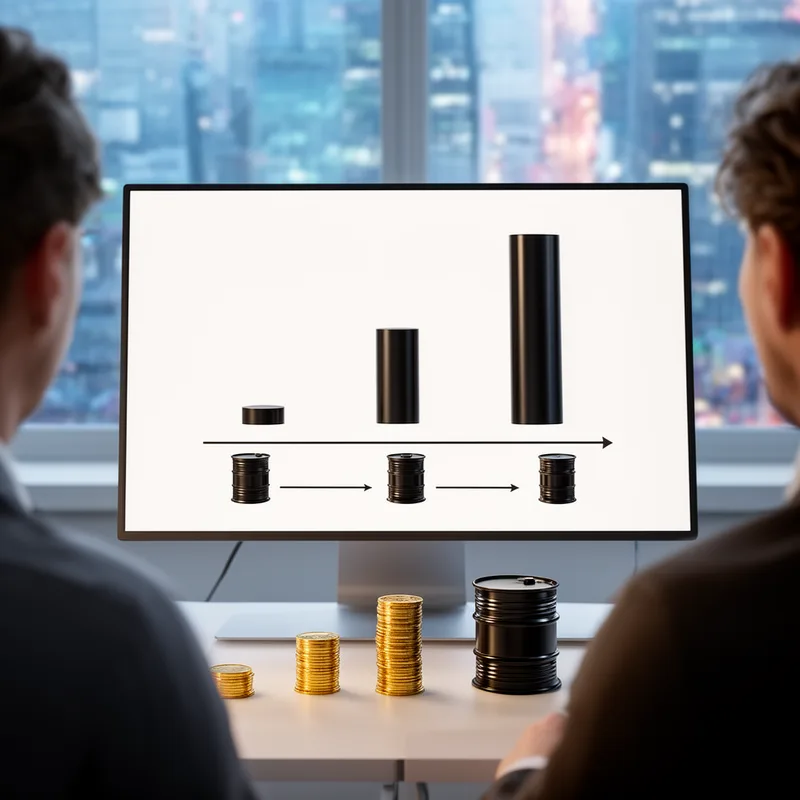
- Contango is when futures prices are higher in later months than in earlier months.
Loading YouTube…
Watch on YouTubeSo it's, it's much more contango than you would normally see.
- So it's, it's much more contango than you would normally see.
- In a continuing contango market, this would see it run down it's overall position over time.
- Bitcoin futures typically, but not always, trade with a modestly upward sloping curve, which is known as contango.
- In short, if you don't know what contango is in futures contracts, you should not be investing in a Bitcoin futures ETF.
Examples
-
In a contango market, future oil prices are higher than current prices, making it attractive for storage.
-
The reason why there is a curve—either backwardation or contango—in futures is because of the cost of carry versus the cost of finance.
Blog text (6) -
In a continuing contango market, this would see it run down it's overall position over time.
-
Oil is presently in sustained contango at a price most would consider high.
Blog text (22) -
When you have a lot of contango in the market, it generates enthusiastic efforts by smart people to try to store more rice.
-
Meanwhile, none of that really matters too much if we continue to see a trend toward "contango" in the long-dated oil futures.
Blog text (6) -
The high contango doesn't predict short-term price, but clearly suggests lower production.
Blog text (22) -
Traders often take advantage of contango by buying commodities at lower spot prices for future sale.
-
Investors may face losses if they sell assets in a contango, where future contracts are priced higher than current ones.
Antonyms

- Specialized
1
9.9
Market condition when the price for later delivery is lower than the expected price at that time
Surface Forms
Etymology
Contango has an uncertain origin, so a helpful way to remember it is to think of continue or 'carry', as in holding goods until a later date. That's why contango describes a market where the future price is higher than the current price: traders may pay to 'carry' or store goods and sell them later.