
consubstantiation


 1
9.9
- noun
- /ˌkɒn.səˌstæntʃiˈeɪ.ʃən/
- Formal
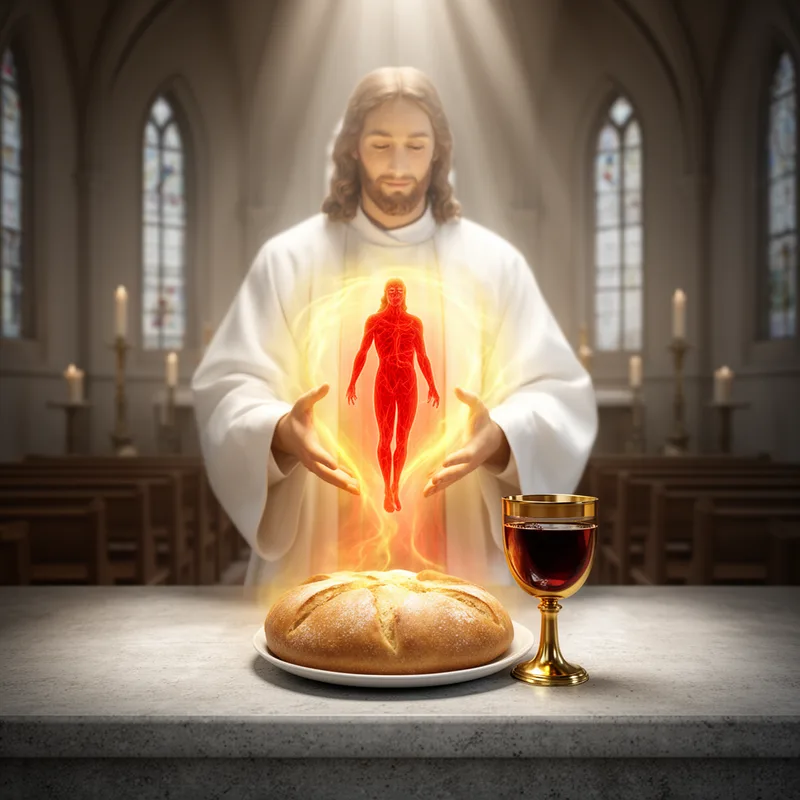
- According to some Christian theologians, consubstantiation means that the bread and wine coexist with Christ's body and blood during Communion.
Examples
-
"Whether you are a Calvinist or an Arminian, a traducianist or a creationist, believe in soul sleep or intermediate bliss, believe in transubstantiation, consubstantiation, or memorialism, none of these ultimately makes any difference.
Blog text (23) -
The debate between transubstantiation and consubstantiation has been a significant topic in Protestant theology.
-
I realized the above might have sounded a bit like consubstantiation, which it wasn't meant to.
Blog text (33) -
Martin Luther had a problem with the Aristotelian metaphysics implied in the doctrine of transubstantiation, but Luther himself espoused the doctrine of 'consubstantiation': the fundamental "substance" of the body and blood of Christ is present alongside the substance of the bread and wine, which remain present.
Blog text (22) -
Many Lutherans accept consubstantiation as a central tenet of their belief regarding the Eucharist.
Surface Forms
Morphology
consubstantiation = consubstantiate (opaque) = con + substanti + ation
Although the word contains recognizable Latin-based elements, its theological meaning is highly specialized and not predictable for most learners from the form alone.
Etymology
Consubstantiation comes from the Latin parts con- meaning 'with' and substantia meaning 'substance', the same root as the English word substance. So think of two substances being 'with' each other, which helps you remember the religious idea that Christ's body and blood are present together with the bread and wine.