
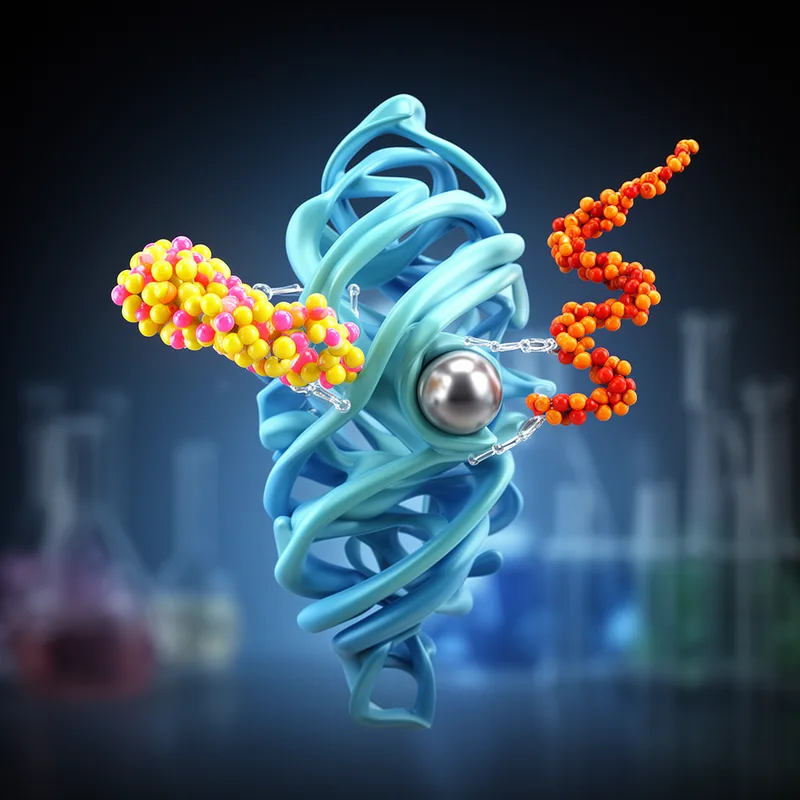
conjugated protein
- noun
- /ˈkɒndʒʊɡeɪtɪd ˈproʊtiːn/
- Specialized
 :
proteína conjugada
:
proteína conjugada
- Hemoglobin is a classic example of a conjugated protein because it contains an iron-containing group.
Examples
-
Many enzymes are conjugated proteins that facilitate biochemical reactions.
-
The laboratory is studying the function of various conjugated proteins in metabolism.
-
Deficiency in certain conjugated proteins can lead to metabolic disorders.
-
Hemoglobin is a type of conjugated protein that contains iron.
-
Hemoglobin is a classic example of a conjugated protein because it contains an iron-containing group.
-
Deficiency in certain conjugated proteins can lead to metabolic disorders.
-
Many enzymes are conjugated proteins that facilitate biochemical reactions.
Synonyms

A substance made of amino acids plus other chemical parts like sugars or metals
Antonyms
Surface Forms
Morphology
The meaning 'a protein combined with other chemical groups' is directly and compositionally derivable from 'conjugated' (attached or combined) + 'protein' (a biological macromolecule), so a B1 learner who knows both constituents should infer the MWE meaning. The term follows regular scientific naming patterns with clear cross-linguistic parallels, making it transparent despite being somewhat technical.
Etymology
Conjugated protein comes from the idea of a protein 'joined' with other chemical parts. The word conjugated means 'joined together', so a conjugated protein is a protein with extra parts like a sugar, a fat, or a metal attached, and that is why it refers to a protein combined with other groups.

