
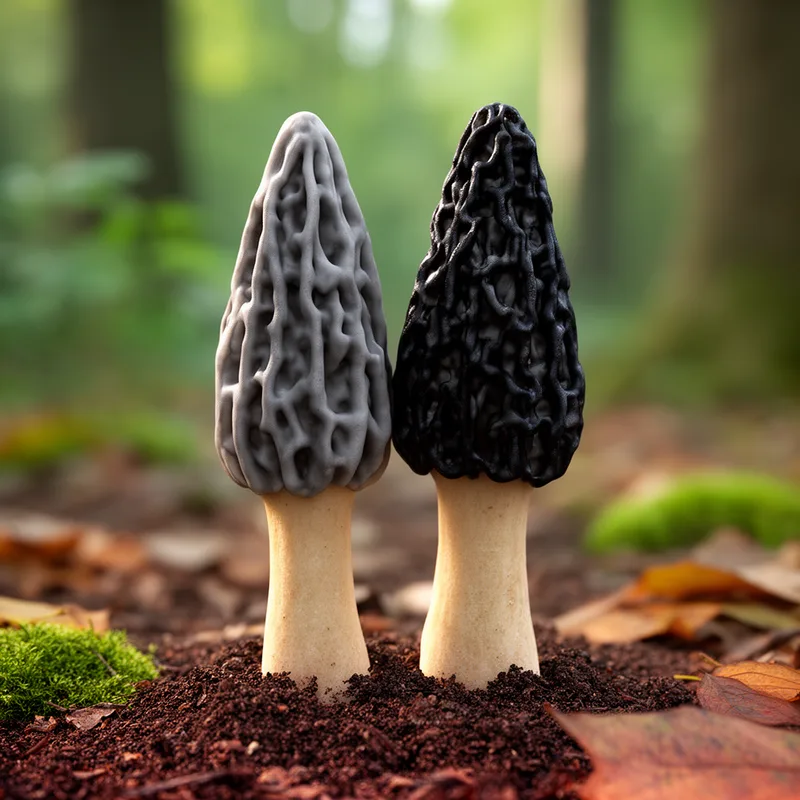
conic morel
- noun
- /ˈkoʊnɪk mɔːrəl/
- Specialized
- When young, the conic morel appears grey, but darkens as it matures.
Examples
-
The conic morel is sought after by mushroom hunters due to its unique flavor.
-
Please be cautious when foraging for conic morels to avoid confusing them with toxic lookalikes.
-
Look at that conic morel over there!
-
Have you ever cooked with a conic morel?
-
Many chefs consider the conic morel to be a delicacy for its distinctive taste and texture.
-
When foraging for mushrooms, it is important to identify a conic morel correctly to enjoy its culinary benefits.
-
In the wild, the conic morel changes from a grey cap to a darker hue as it reaches maturity.
Synonyms

An edible mushroom with a pitted cone-shaped cap attached to its stem, grey when young and black when older
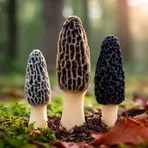
A mushroom with a pitted cap joined directly to the stem that darkens from grey to black with age

A mushroom with a cap full of holes attached to the stem, gray when young and turning black with age
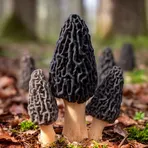
An edible mushroom with a deeply pitted cap that is grey when young and turns black as it ages
Surface Forms
Morphology
The phrase is a straightforward adjective + noun description: 'conic' means cone-shaped and 'morel' is a type of mushroom, so the overall meaning (a cone-shaped morel) is directly and transparently derived from the parts. This simple descriptive composition follows common adjective–noun patterns found cross-linguistically, so a B1 learner who knows both words would readily understand it.
Etymology
Conic morel is named for how it looks: conic means a 'cone-shaped' top and morel is a kind of 'mushroom' with a cap full of small holes that is attached right to the stem. So the name helps you picture and identify this grey young mushroom that darkens as it grows.

