
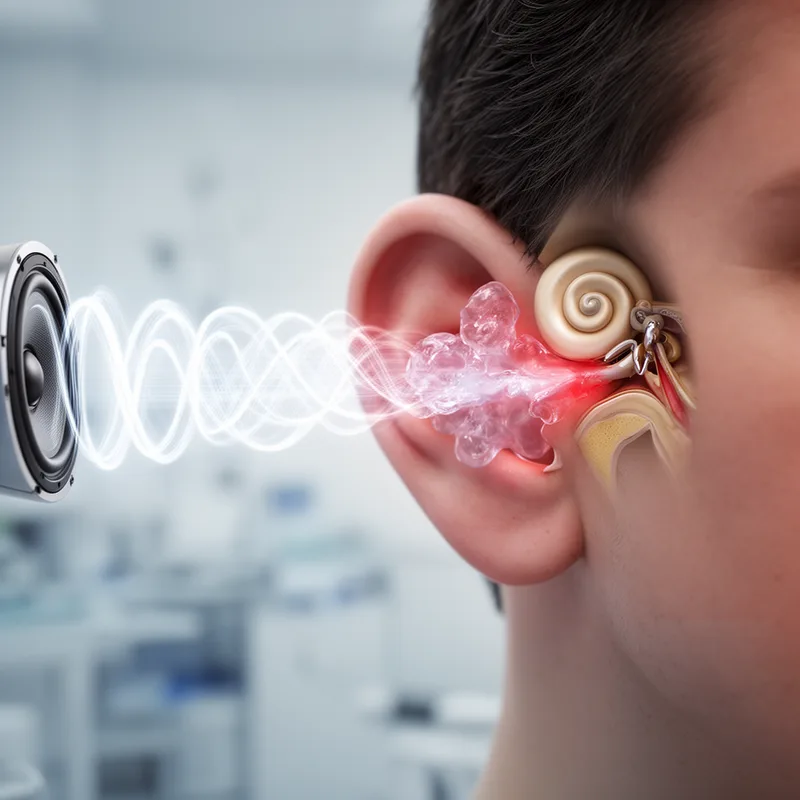
conduction deafness
- noun
- /kənˈdʌkʃən ˈdɛf.nəs/
- Specialized
- Chronic ear infections can sometimes lead to conduction deafness if not properly treated.
Examples
-
The doctor diagnosed him with conduction deafness after examining his middle ear.
-
People with conduction deafness may benefit from certain types of hearing aids.
-
He was diagnosed with conduction deafness last year.
-
Many people with conduction deafness can benefit from surgery.
-
Chronic ear infections can sometimes lead to conduction deafness if not properly treated.
-
The doctor diagnosed him with conduction deafness after examining his middle ear.
-
Many people with conduction deafness can benefit from surgery.
Synonyms

Sound cannot pass through the middle ear to reach the inner ear, causing hearing loss

Hearing loss caused by problems with the small bones in the middle ear
Surface Forms
Morphology
The phrase denotes deafness resulting from a problem with the conduction (transfer) of sound, so its meaning is directly built from 'conduction' (transfer of energy/sound) + 'deafness' (inability to hear). Although somewhat medical/technical, the compositional logic is clear and mirrors equivalent terms in other languages, so a learner who knows both constituents can infer the meaning.
Etymology
Conduction deafness uses conduction to mean 'carrying' and deafness to mean 'hearing loss'. Imagine sound as a small car trying to travel a road into the inner ear, but the middle ear bones or fluid block the road so the sound cannot be carried through, and the person cannot hear those sounds.

