
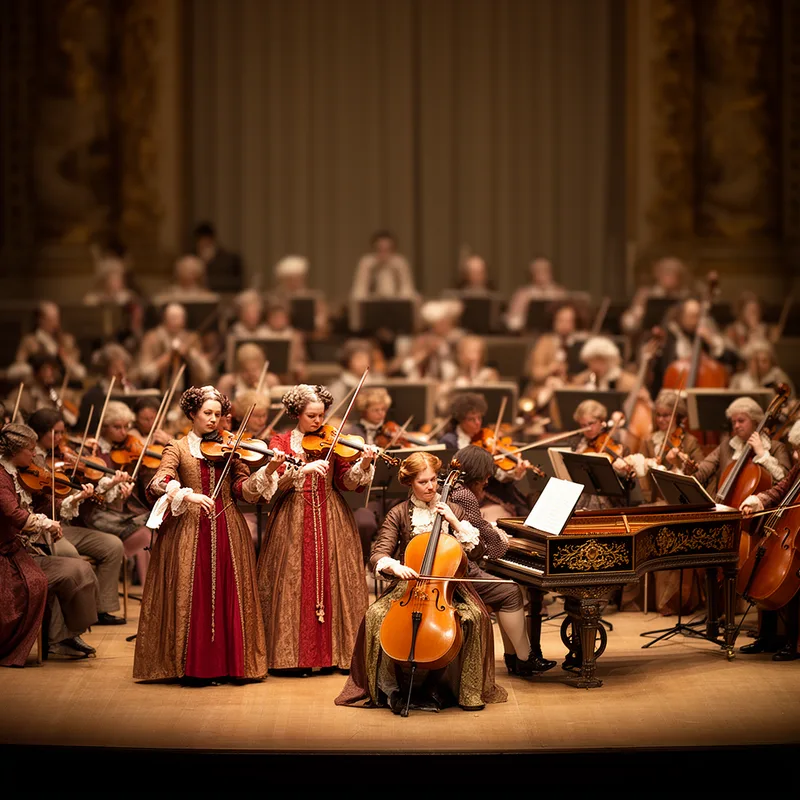
concerto grosso
- noun
- /kənˈtʃɛrtoʊ ˈɡroʊsoʊ/
- Specialized
- In many concerto grosso works, the solo group contrasts with the orchestra, creating a rich musical dialogue.
Examples
-
The pitting of a solo group against a larger group in the concerto grosso, for example, was spatially conceived.
Academic text (1992) -
The concerto grosso showcases the dynamic interplay between the soloists and the full orchestra.
-
A famous example of a concerto grosso is Vivaldi's 'Concerto for Strings in G Major.'
Synonyms
 32
7.5
32
7.5

A piece of music for a solo player and an orchestra in several parts


 1
9.9
1
9.9
A musical piece for one or more solo instruments with an orchestra, often lively
Surface Forms
Morphology
concerto + grosso
While 'concerto' provides a clear musical frame, 'grosso' is an Italian element (not present in the dictionary entry) whose literal sense (roughly 'large' or 'big') might let a learner guess 'a large concerto' but would not convey the specialized Baroque meaning involving contrast between a small group of soloists and the full orchestra. The term is historically borrowed and technical, so its precise function is not fully predictable from the constituents.
Etymology
Concerto grosso comes from Italian and puts together concerto and grosso, where concerto is 'concert' and grosso means 'big'. It names a piece where a 'small group' of solo players plays against the 'full orchestra', so the 'big' word reminds us of that contrast.