
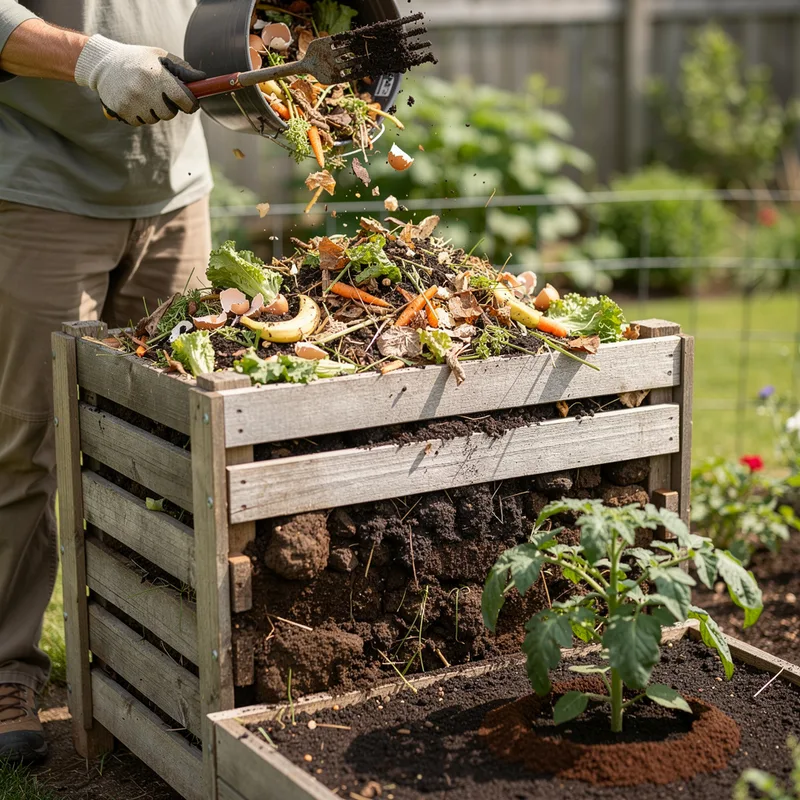
to compost
 6
3.7
6
3.7

- verb
- /ˈkɒmpoʊst/
- By using a compost bin, you can effectively compost kitchen waste and help reduce landfill waste.
- composts yard trimmings
- compost food
- compost waste
Loading YouTube…
Watch on YouTubeYou really want to let those set and fully compost, fully breakdown.
- You really want to let those set and fully compost, fully breakdown.
- They don't actually compost food scraps by themselves.
- Now I'm composting and creating soil with my kids help.
- Now I am composting and creating soil instead of waste.
- And make sure these boxes do get composted.
- I think in more moist climates these would compost quicker.
- And then if any mold does grow, you can simply take the moldy cabbage leaf off and compost it.
- Are you going to compost air in well there?
- It's now composted and there's my empty flowers behind.
Examples
-
We decided to compost the leftover vegetable scraps and yard waste to create nutrient-rich soil.
-
After visiting Mohonk Mountain House, Bob Beach was spurred to try composting his resort's food scraps.
Academic text (1995) -
You really want to let those set and fully compost, fully breakdown.
-
So we do compost the ones that don't quite make it.
-
And do you know that we're composting now?
-
Now I am composting and creating soil instead of waste.
-
And I also think we should start composting.
-
Fish oil may prove to be the secret ingredient for composting the materials.
Academic text (1999) -
Two resorts are using low-budget techniques to compost food residuals generated by guests and employees.
Academic text (1995) -
The town of Wilton's wastewater treatment facility has been successfully composting its biosolids since 1993.
Academic text (1999)
Synonyms
Change dead plant material into dark, rich soil
Compounds
How Efficient

Surface Forms
Etymology
Compost comes from the same Latin parts com- 'together' and ponere 'to put', like in compose. To compost something is to put plant waste together so it can rot and turn into rich soil.