
commonage
- noun
- /ˈkɒmənɪdʒ/
- UK
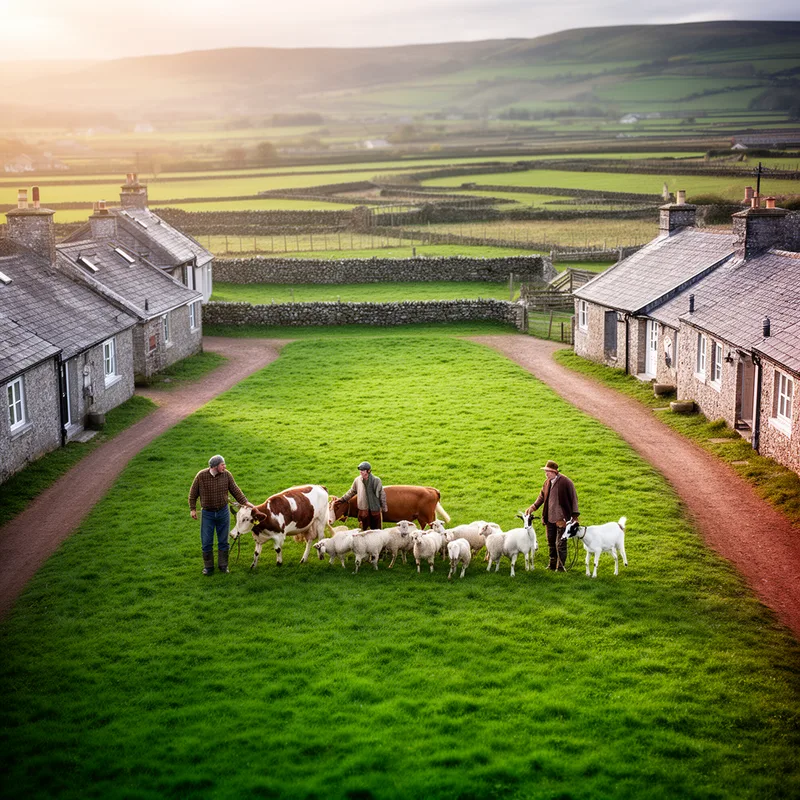
- The village's commonage is used for grazing.
Examples
-
Many villages retained the right to graze animals on the commonage after enclosure.
-
Disputes sometimes arose over the boundaries of the commonage in rural communities.
-
The tradition of commonage still survives in parts of Ireland and Scotland.
-
Many families rely on the commonage for firewood.
-
The community decided to preserve the commonage so that future generations could enjoy the fields and pastures.
-
After much discussion, the villagers agreed to allocate the commonage for community events and livestock grazing.
-
Access to the commonage allowed families to gather for picnics, while also supporting the local farmers' needs.
Synonyms
 7
3.2
7
3.2

Shared open land in a community like a park or pasture

 1
3.5
1
3.5
Land that local people can use, often to graze animals
A share giving each owner equal rights to the whole property

An equal claim that lets each owner use the whole property rather than a separate part
Antonyms
 68
2.8
68
2.8
Things you can move, like cars or jewelry, that belong to one person, not land
How Public

Surface Forms
Morphology
Etymology
The word commonage comes from common, meaning 'shared' or 'for everyone', and the suffix -age, meaning 'a place or condition'. So a commonage was land people of a village used together, and today it still means land owned or used by a community.