
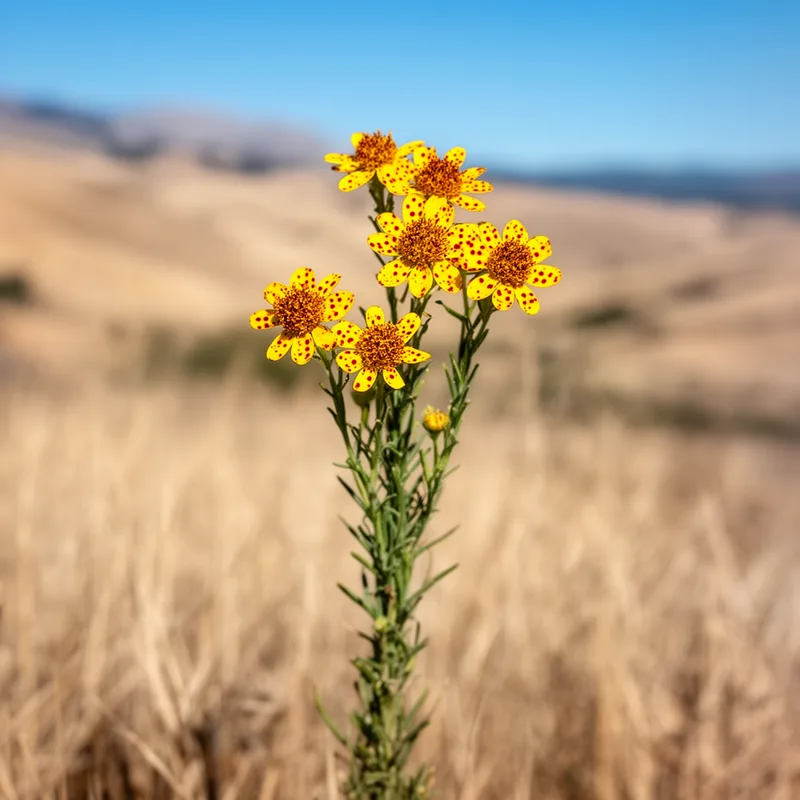
common tarweed
- noun
- /ˈkɒmən ˈtɑːrˌwiːd/
- US
- In California's arid landscape, the common tarweed stands out with its striking yellow rays and red-brown spots.
Examples
-
Botanists noted the distinctive spotted petals of the common tarweed during their survey.
-
The common tarweed is often one of the last wildflowers to bloom in California's dry season.
-
The fields were covered in common tarweed during the height of summer.
-
The common tarweed blooms in late summer.
-
Look at that common tarweed!
-
During the summer, the vibrant yellow flowers of the common tarweed attract many bees and butterflies.
-
The researchers celebrated when they discovered a patch of common tarweed with unusually large flowers.
Synonyms
A California plant that lives one year and has yellow flowers with brown spots at the base of the petals
An annual California wildflower with yellow flowers and red-brown spots near their base

Plants with sticky leaves and a strong smell that grow in western North America
Surface Forms
Morphology
The phrase is a straightforward adjective + noun composition: 'common' (typical, frequently occurring) simply modifies 'tarweed' (a type of resinous plant), so the overall meaning — a tarweed species that is common — is directly derivable from the parts. This compositional pattern is transparent and cross-linguistically familiar, so a B1 learner who knows both constituents would understand it.
Etymology
Common tarweed gets its name from the sticky, dark sap that smells like tar, so people called the plant a tar weed. So, today the name means a common wildflower with a sticky, tar-like feel.

