
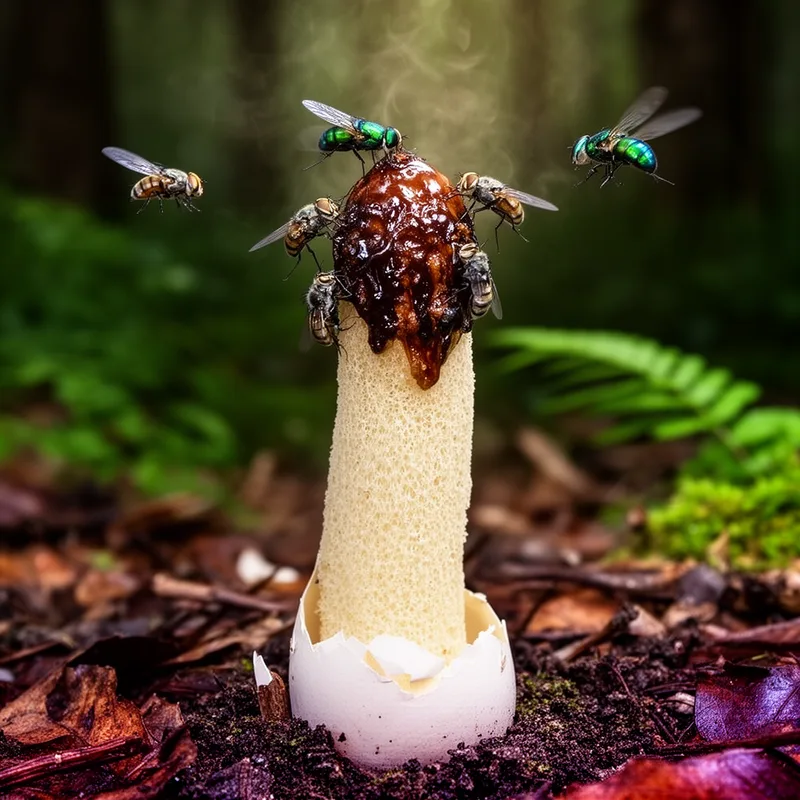
common stinkhorn
- noun
- /ˈkɒmən ˈstɪŋkˌhɔrn/
- The foul smell of the common stinkhorn attracts flies, which help spread its spores.
Examples
-
The common stinkhorn can often be found in damp woodland during late summer and autumn.
-
Gardeners were surprised to discover a common stinkhorn growing near the compost heap.
-
The common stinkhorn emits a strong odor.
-
Have you ever seen a common stinkhorn in the wild?
-
The common stinkhorn has a distinctive shape and emits a foul odor that attracts insects.
-
During a nature walk, we encountered a common stinkhorn near the trail, releasing an unpleasant smell.
-
In late summer, the common stinkhorn can be found in various damp areas, often surprising hikers with its odor.
Synonyms

A common mushroom that smells strong and grows in damp woods
Surface Forms
Morphology
The phrase simply combines 'common' (widespread) with 'stinkhorn' (a foul-smelling fungus), so the meaning 'a widespread species of smelly fungus' is directly derivable from the constituents. This adjective + noun composition is a regular, compositional pattern familiar across languages, so a B1 learner who knows both words would understand it.
Etymology
Common stinkhorn gets its name from the mushroom's strong, bad stink and from its tall, pointed shape that looks like a horn. The bad smell attracts flies that spread its spores, so the name helps us remember it is 'smelly' and 'horn-shaped'.

