
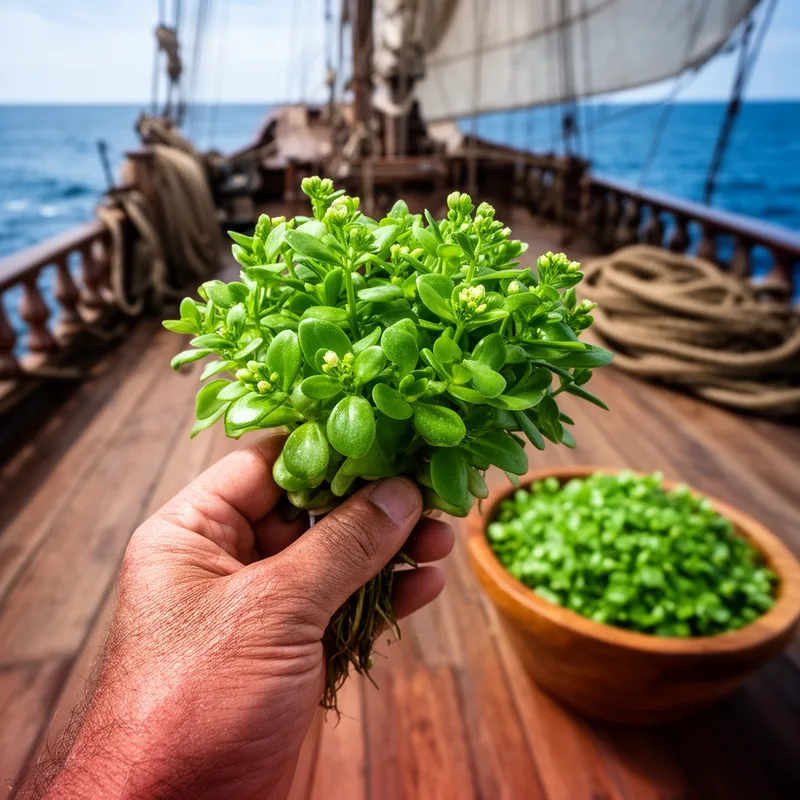
common scurvy grass
- noun
- UK
- Sailors used common scurvy grass during long voyages to prevent vitamin C deficiency.
Examples
-
Historians note that common scurvy grass was once vital for treating scurvy in Arctic explorers.
-
The leaves of common scurvy grass have a sharp, peppery flavor and are edible.
-
The common scurvy grass is rich in vitamin C.
-
Have you ever tried common scurvy grass?
-
Sailors used common scurvy grass during long voyages to prevent vitamin C deficiency.
-
Historians note that common scurvy grass was once vital for treating scurvy in Arctic explorers.
-
The leaves of common scurvy grass have a sharp, peppery flavor and are edible.
Synonyms
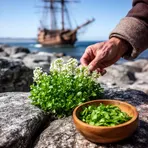
A small coastal plant called scurvy-grass that contains vitamin C and helps prevent scurvy

A small coastal plant with yellow flowers high in vitamin C
Surface Forms
Morphology
The phrase is compositionally built: 'scurvy' (the illness) modifies 'grass' (a plant), so a learner who knows both words can infer it is a plant associated with scurvy (i.e., rich in vitamin C) and 'common' simply marks it as a typical variety. This relation is literal and predictable across languages, so a B1 learner who knows the constituents would grasp the MWE's meaning.
Etymology
Common scurvy grass is a small coastal plant that sailors and Arctic explorers ate because it had lots of vitamin C. People named it scurvy grass because eating its leaves helped 'prevent scurvy' on long voyages, so the name stuck.

