
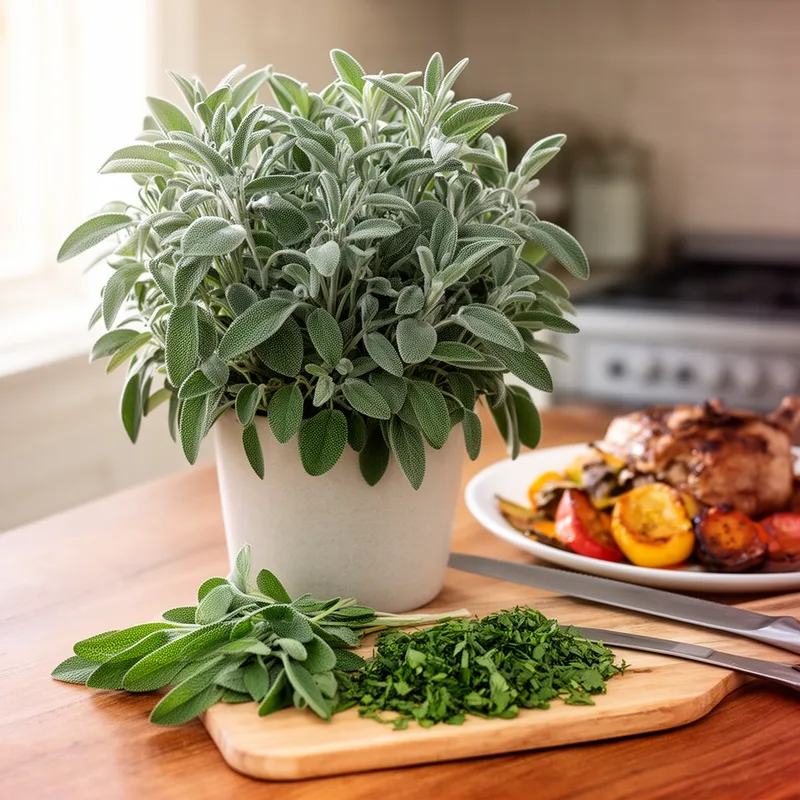
common sage
- noun
- /ˈkɑːmən seɪdʒ/
- Fresh common sage adds a robust flavor to roasted meats and vegetables.
Examples
-
The recipe calls for a teaspoon of chopped common sage.
-
Many gardeners grow common sage for its attractive foliage and culinary uses.
-
I love adding common sage to my roasted vegetables.
-
The common sage plant thrives in sunny gardens.
-
Fresh common sage adds a robust flavor to roasted meats and vegetables.
-
Many gardeners grow common sage for its attractive foliage and culinary uses.
-
The recipe calls for a teaspoon of chopped common sage.
Synonyms

 46
3.5
46
3.5

A grey-green plant with leaves that have a strong smell and add flavor to food
 9
9.9
9
9.9
A small bush with strong smelling grey green leaves used to flavor food

A low bush called sage with grey-green leaves people use to add flavor to food
Surface Forms
Morphology
The meaning is a straightforward adjective + noun composition: 'common' (typical) + 'sage' (the aromatic herb) indicates the usual/widespread variety of the herb. This is a transparent, cross-linguistic pattern (type/kind labeling), so a B1 learner who knows both constituents will readily infer the MWE's meaning.
Etymology
Common sage may get its name from the old belief that the plant sage could 'save' or 'heal' people, so it was kept for medicine. That's why people trusted it in the kitchen and today common sage means the familiar cooking herb.