
common nardoo
- noun
- Australian
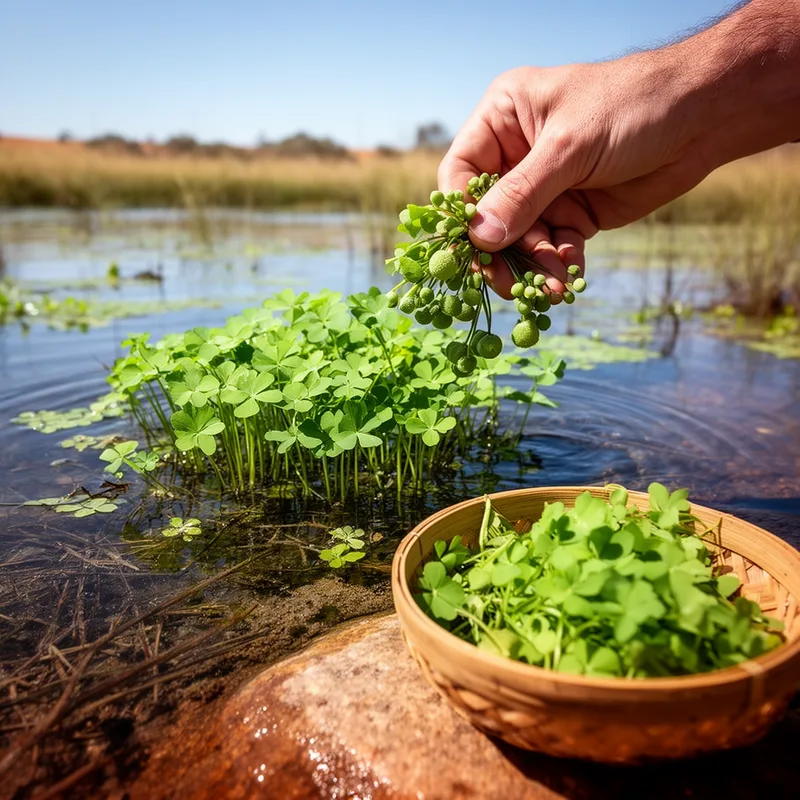
- The common nardoo thrives in the floodplains of Australia's inland waterways.
Examples
-
Indigenous communities have traditionally harvested common nardoo spores as a food source.
-
The explorers survived for weeks by eating common nardoo collected from the riverbanks.
-
The common nardoo grows near the riverbanks.
-
Indigenous Australians have long used common nardoo as a food source.
-
Indigenous communities have traditionally harvested common nardoo spores as a food source.
-
The explorers survived for weeks by eating common nardoo collected from the riverbanks.
-
Indigenous Australians have long used common nardoo as a nutritious food in their diet.
Synonyms

An Australian water plant with leaves like a four-leaf clover that people eat

A water fern with clover-like leaves that grows in rivers and wetlands

A small Australian fern with soft clover-like leaves that grows in damp places
Surface Forms
Morphology
This is a straightforward adjective+noun composition: 'common' (frequent/typical) modifies 'nardoo' (a specific fern), so the phrase denotes the nardoo that is common or widespread. The meaning is fully compositional and follows a standard English modifier+noun pattern, so a B1 learner who knows both constituent words would readily understand it.
Etymology
Common nardoo may come from an Indigenous Australian word for this water fern. People called it nardoo because of its clover-like leaves that float on the water and because they dried its tiny 'spores' to make a simple 'food'. So, the name points to a water plant that was used as 'food'.

