
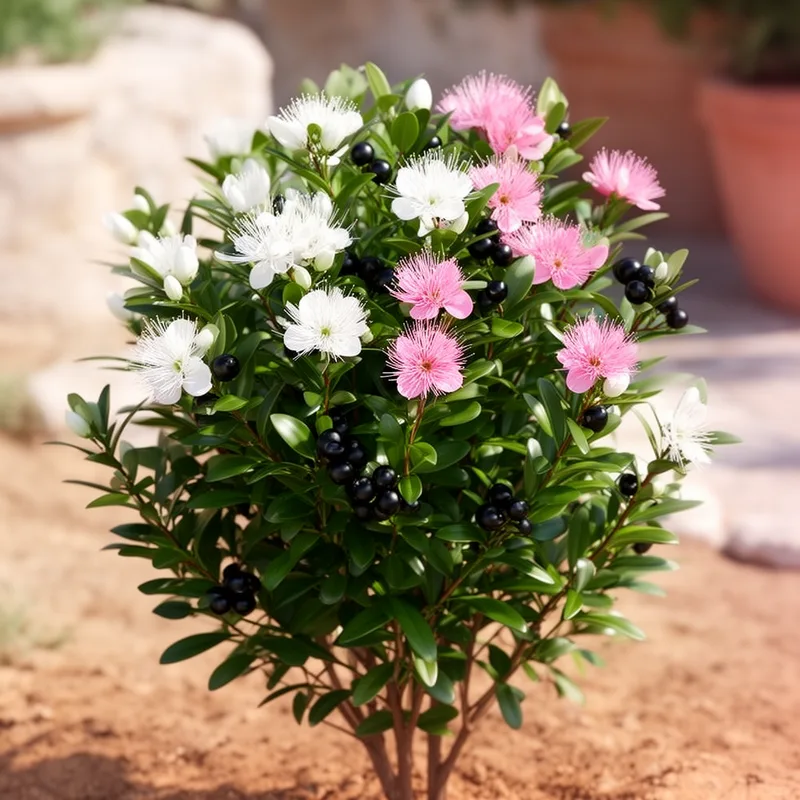
common myrtle
- noun
- /ˈkɑːmən ˈmɜːrtəl/
- The common myrtle thrives in warm climates.
Examples
-
Traditional herbal medicine sometimes uses parts of the common myrtle for their aromatic properties.
-
In Mediterranean climates, the common myrtle thrives in well-drained soil and full sunlight.
-
The common myrtle is often cultivated in gardens for its fragrant blossoms.
-
Have you ever seen a common myrtle in bloom?
-
The garden was filled with fragrant flowers of common myrtle alongside lavender and rosemary.
-
The chef added fresh leaves of common myrtle to the marinade for a unique flavor.
-
In traditional rituals, common myrtle is often used for decoration due to its aromatic leaves.
Synonyms

 5
7.5
5
7.5

A small evergreen shrub with shiny leaves and white or pink flowers

An evergreen Mediterranean shrub with fragrant leaves, white or pink flowers and dark blue berries
Surface Forms
Morphology
The phrase is an adjective + noun composition: 'common' (widespread/ordinary) + 'myrtle' (an aromatic shrub), so the meaning — the ordinary/widespread myrtle species — is directly derivable from the parts. This naming pattern for species (e.g. 'common X') is cross-linguistically frequent, so a B1 learner who knows both words would readily understand the MWE.
Etymology
Common myrtle may come from old names for the fragrant myrtle plant that people around the Mediterranean used to make flower crowns and perfume. Thinking of a sweet-smelling bush at celebrations helps you remember the name. The word 'common' simply means 'widespread', so common myrtle refers to the familiar aromatic shrub you often see in gardens.