

common maidenhair
- noun
- The common maidenhair thrives in humid forest environments, where moisture is abundant.
Examples
-
The common maidenhair fern thrives in shaded areas.
-
I planted a common maidenhair in my terrarium because of its graceful appearance.
-
Botanists often admire the delicate structure of the common maidenhair when conducting fieldwork.
-
Many gardeners love the common maidenhair for its beauty.
-
I planted a common maidenhair in my terrarium because of its graceful appearance.
-
Botanists often admire the delicate structure of the common maidenhair when conducting fieldwork.
-
The common maidenhair thrives in humid forest environments, where moisture is abundant.
Synonyms


 1
9.1
1
9.1
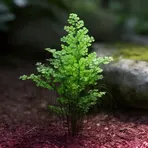
A small fern with thin, delicate leaves that look like hair

A delicate fern with thin shiny black stems and small light green leaves

A delicate fern with thin shiny black stalks and small leaves that grows in moist shade

A delicate fern with thin shiny black leaf stalks and bending leaves that grows in shade near water

A small fern with fine feathery leaves and shiny black stems that grows in wet shade

A plant with thin, fan-shaped leaves that grows in moist shade and is often kept indoors
Surface Forms
Morphology
This is a straightforward adjective+noun composition: 'common' (frequently occurring) modifies 'maidenhair' (a type of fern), so the phrase denotes the maidenhair fern that is common. The meaning is directly derivable from the constituents and follows a basic, cross-linguistically common nominal modification pattern, so a B1 learner who knows both words will understand it.
Etymology
Common maidenhair may get its name from the fern's very thin, soft leaves that look like a young woman's hair; people used maiden and hair to paint the picture of its delicate fronds and dark, shiny stalks. So the words maiden ('young woman') and hair point to the plant's fragile, hair-like leaves and explain the name for this fern.