
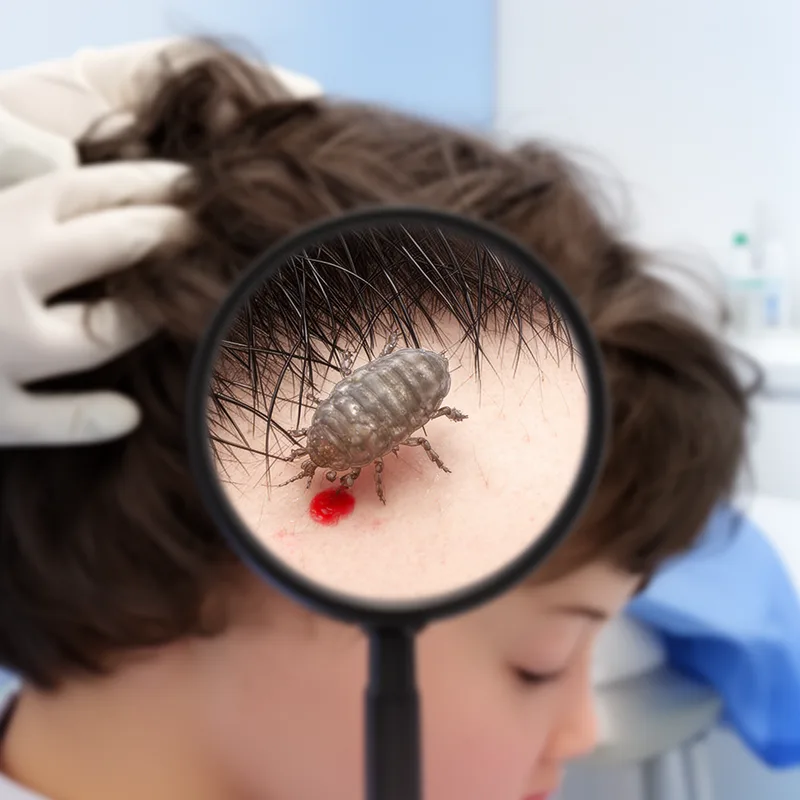
common louse
- noun
- /ˈkɒmən laʊs/
- The common louse is often found in the hair of children, making it important for parents to check regularly.
Examples
-
Infestations of the common louse are more frequent among school-aged children.
-
The school nurse checked all the children for common louse infestations.
-
A common louse can live up to a month on the human body if not treated.
-
The common louse can cause severe itching.
-
A common louse can be hard to detect.
-
Infestations of the common louse can lead to intense itching and discomfort for those affected.
-
After the outbreak of common louse in the classroom, the school organized an inspection for all students.
Synonyms
A small insect that lives on people's hair or clothing and feeds on blood
Surface Forms
Morphology
The noun phrase 'common louse' is fully compositional: 'common' (typical/frequent) modifies 'louse' (a tiny parasitic insect), so the combined meaning is simply a frequently occurring or typical louse. This straightforward adjectival modification follows normal cross-linguistic patterns, so a B1 learner who knows both constituent words will readily understand the phrase.
Etymology
Common louse is a name that literally describes the animal: louse means a 'tiny parasite' and common shows it is 'widespread among people'. So the phrase means a small insect that lives on the human body, feeds on blood, and causes itching.

