
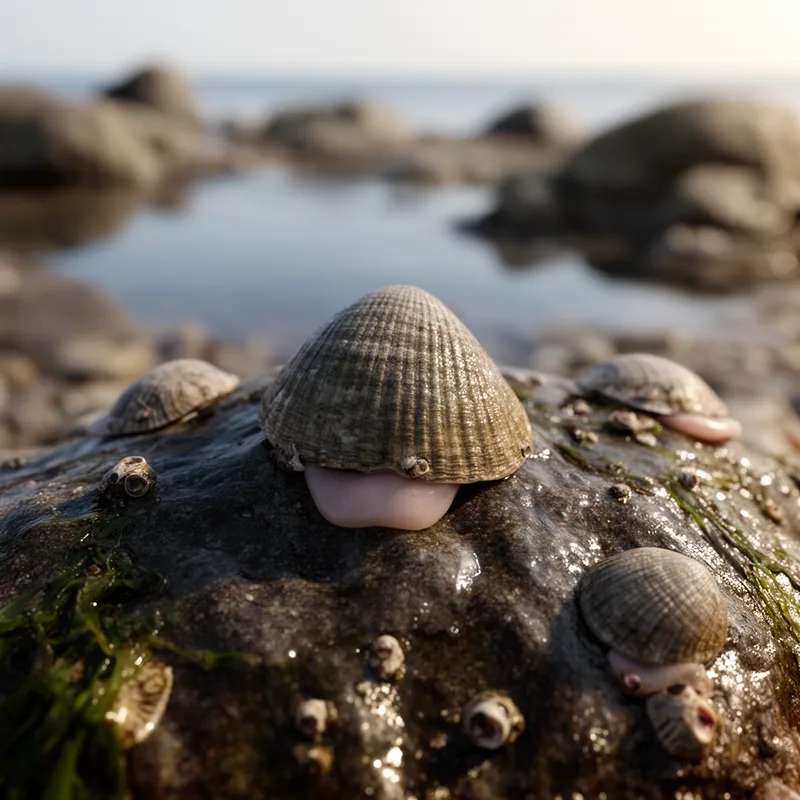
common limpet
- noun
- UK
- The common limpet uses its muscular foot to attach itself firmly to rocks.
Examples
-
Overharvesting has led to a decline in common limpet populations along some beaches.
-
At low tide, children searched the rocks for common limpets and tiny crabs.
-
The common limpet is often found on rocky shores.
-
Many common limpets can be seen during low tide.
-
At low tide, children searched the rocks for common limpets and tiny crabs.
-
Overharvesting has led to a decline in common limpet populations along some beaches.
-
Many common limpets can be seen during low tide, glued to the rocks.
Synonyms
 2
7.2
2
7.2

A small sea animal with a low cone-shaped shell that sticks tightly to rocks

A small sea animal with a hard cone shell that clings to rocks and is eaten in some coastal areas
Surface Forms
Morphology
The phrase "common limpet" is directly built from 'common' (typical, widespread) + 'limpet' (a marine animal that clings to rocks), so its sense as the typical or widespread limpet species is immediately derivable. This adjective+noun compositional pattern for naming animals is cross-linguistically familiar, making it accessible to a B1 learner who knows both constituents.
Etymology
Common limpet names a small sea animal with a cone-shaped shell that clings tightly to rocks. The word limpet may come from an old word for 'slug', but the clear image is of the creature 'clinging' so firmly to the rock, so the name points to that sticking habit.