
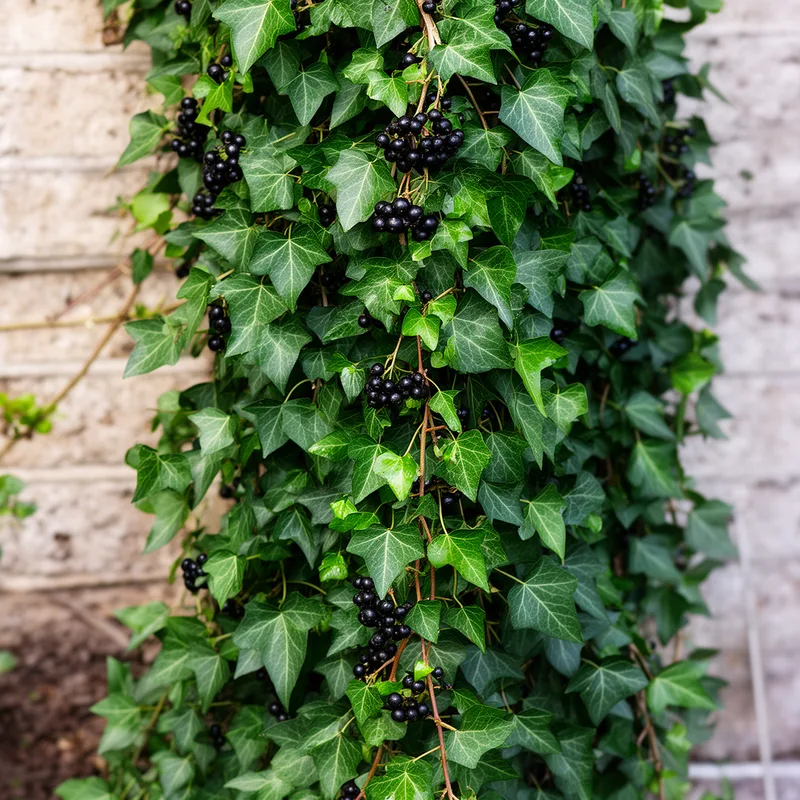
common ivy
- noun
- /ˈkɑːmən ˈaɪvi/
- Birds are attracted to common ivy because of its dense foliage and small, black fruits.
Examples
-
The common ivy grows well in shady areas.
-
Common ivy can cover walls and fences, giving gardens a lush, green appearance year-round.
-
Gardeners often plant common ivy to provide ground cover and prevent soil erosion.
-
Many gardeners love the common ivy for its lush appearance.
-
In the garden, the common ivy climbed over the trellis, creating a beautiful green wall.
-
Many homeowners enjoy the sight of common ivy adorning their fences and walls during the summer months.
-
The gardener decided to plant common ivy as it requires little maintenance and thrives in shaded areas.
Synonyms

 43
1.0
43
1.0

A climbing plant with green leaves and small dark berries that grows on walls


 1
3.9
1
3.9
A climbing evergreen vine with lobed green leaves and small black berries often grown in gardens

A climbing evergreen plant with shiny dark green leaves that often covers walls and ground

A climbing plant like English ivy that covers walls and the ground
Surface Forms
Morphology
The phrase denotes an ivy that is 'common' (ordinary or widespread), so a B1 learner who knows 'common' and 'ivy' can infer it refers to a commonplace/widespread ivy species. The meaning follows a regular adjective + noun composition and is cross-linguistically transparent, so no idiomatic knowledge is required.
Etymology
Common ivy is named for being the ivy people see everywhere. The word common simply means 'the usual' or 'found a lot', and the picture of the same ivy climbing walls and fences helps you remember it is the familiar, widespread climbing plant.