

common gum cistus
- noun
- UK
- Perfume makers use the resin from the common gum cistus to create long-lasting fragrances.
Examples
-
In its native habitat, the common gum cistus thrives in dry, rocky soils under the Mediterranean sun.
-
The common gum cistus is prized by gardeners for its attractive white flowers and aromatic resin.
-
The common gum cistus is known for its fragrant resin.
-
Many gardeners love the common gum cistus for its beauty.
-
In its native habitat, the common gum cistus thrives in dry, rocky soils under the Mediterranean sun.
-
Perfume makers use the resin from the common gum cistus to create long-lasting fragrances.
-
The common gum cistus is prized by gardeners for its attractive white flowers and aromatic resin.
Synonyms

A shrub from the Mediterranean with white flowers and sticky leaves that produce a fragrant resin used in perfume
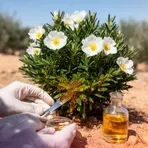
A small bush with white flowers and sticky leaves that gives a fragrant resin used to make perfumes last longer
Surface Forms
Morphology
This is a fully compositional noun phrase: 'common' (widespread) + 'gum' (sticky resin) + 'Cistus' (a genus of shrubs), so a B1 learner who knows the constituents can infer it refers to a cistus shrub that produces a gum/resin and is common. Botanical naming and adjective+noun+noun compounding are regular and cross-linguistically transparent, so the overall meaning is predictable from the parts.
Etymology
Common gum cistus gets its name from the plant's sticky, fragrant resin; gum points to the glue-like sap and cistus is the shrub itself, so the name reminds us of a common shrub used in 'perfume' because of its sticky resin.

