

common carline thistle
- noun
- UK
- The common carline thistle is often found in sandy, well-drained soils across parts of Europe.
Examples
-
On our hike, we spotted a common carline thistle thriving among the chalky hills.
-
Gardeners sometimes plant common carline thistle to attract pollinators like bees and butterflies.
-
Look at that beautiful common carline thistle!
-
The common carline thistle thrives in sandy soils.
-
On our hike, we spotted a common carline thistle thriving among the chalky hills.
-
The common carline thistle is often found in sandy, well-drained soils across parts of Europe.
-
Gardeners sometimes plant common carline thistle to attract pollinators like bees and butterflies.
Synonyms
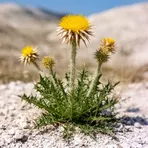
A spiny wildflower like a thistle with yellow flower heads that grows in dry sandy soil

A spiky European plant with a large silver flower head

A spiky plant like a thistle that has a large decorative flowerhead
Surface Forms
Morphology
The phrase is fully compositional: 'common' is an adjective modifying the species name 'carline' and 'thistle' is the head noun, so the meaning 'a common carline-type thistle' follows directly from the constituents. There is no idiomatic or metaphorical shift—this is a straightforward botanical compound that a B1 learner who knows the component words can understand.
Etymology
Common carline thistle is the name for a spiky plant with a flat, yellowish flower head, and the word carline is an old name people used for this kind of thistle. Because people long ago used the dry flower heads as charms or simple medicines, the image of a spiky, sun-like head helps us remember this plant that grows on dry, chalky hills.

