

common buttercup
- noun
- The common buttercup blooms in vibrant yellow during late spring.
Examples
-
The common buttercup blooms in vibrant yellow.
-
Many gardeners love the common buttercup for its beauty.
-
Common buttercup is sometimes mistaken for other yellow wildflowers, but its tall stems set it apart.
-
In the meadow, bright common buttercup blossoms stretched as far as the eye could see.
-
She bent down to pick a common buttercup for her wildflower bouquet.
-
In the meadow, bright common buttercup blossoms stretched as far as the eye could see.
-
She bent down to pick a common buttercup for her wildflower bouquet.
Synonyms

A common yellow buttercup that grows in meadows in Europe and North America

A wildflower with bright yellow spring flowers found in meadows

A wild plant with tall stems and bright yellow flowers

A tall wild plant with bright yellow spring flowers that can poison farm animals
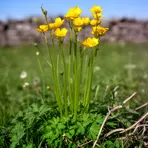
A European wild flower that comes back every year with bright yellow spring flowers
Surface Forms
Morphology
The noun phrase is a straightforward adjective + noun composition: 'common' (frequently occurring) + 'buttercup' (a yellow, cup-shaped flower), so the meaning—a frequently occurring buttercup species—is directly derivable from the constituents. There is no idiomatic or metaphorical shift, and this compositional pattern is cross-linguistically transparent, so a B1 learner who knows both words would understand it.
Etymology
Common buttercup may come from the flower's bright yellow, cup-shaped petals that look like a small dish of butter. That's why the name links butter and cup to the plant's yellow, cup-like flowers.

