

combat fatigue
- noun
- /ˈkɒmbæt fəˈtiːɡ/
- Archaic
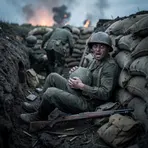
- The symptoms of combat fatigue often include anxiety, nightmares, and a deep sense of exhaustion caused by prolonged warfare.
- combat fatigue or shell shock
- shell shock or combat fatigue
Examples
-
During the war, the new notation for psychological casualty was "combat fatigue," an unavoidable wearing out of one of the components of the military machine.
Academic text (2001) -
I heard people talk about this, um... combat fatigue.
-
Once the individual is on the job, the range of available strategies to combat fatigue is more restricted.
Academic text (1997) -
The term "shell shock" was followed in WWII by the term "combat fatigue."
Academic text (2012) -
Many soldiers returning from the front line suffer from combat fatigue, which can affect their mental health long after the war ends.
-
After enduring months of intense battle, he was diagnosed with combat fatigue, struggling to cope with the memories of war.
Synonyms

 5
7.5
5
7.5

A severe emotional and physical reaction after a long time in war or heavy fighting
 2
8.2
2
8.2
Strong tiredness and fear that soldiers feel after long fighting

Strong emotional problems soldiers get after war that cause worry and bad dreams
How Severe
- Specialized
2
4.4

- Archaic
92
4.2
20
3.1
10
1.0
Surface Forms
Morphology
The meaning is directly built from 'combat' (fighting) + 'fatigue' (tiredness), so a B1 learner who knows both words will infer it denotes tiredness or exhaustion resulting from combat — which matches the intended sense of battle-related exhaustion or stress. The construction is compositional and has clear equivalents in other languages (e.g., 'battle fatigue' / literal translations), supporting immediate comprehension.
Etymology
Combat fatigue comes from soldiers in long wars who were worn out by constant fighting and danger. The word combat means fight and fatigue means great tiredness, so the phrase came to mean the 'extreme tiredness' and stress that affects a soldier's mind and body.