
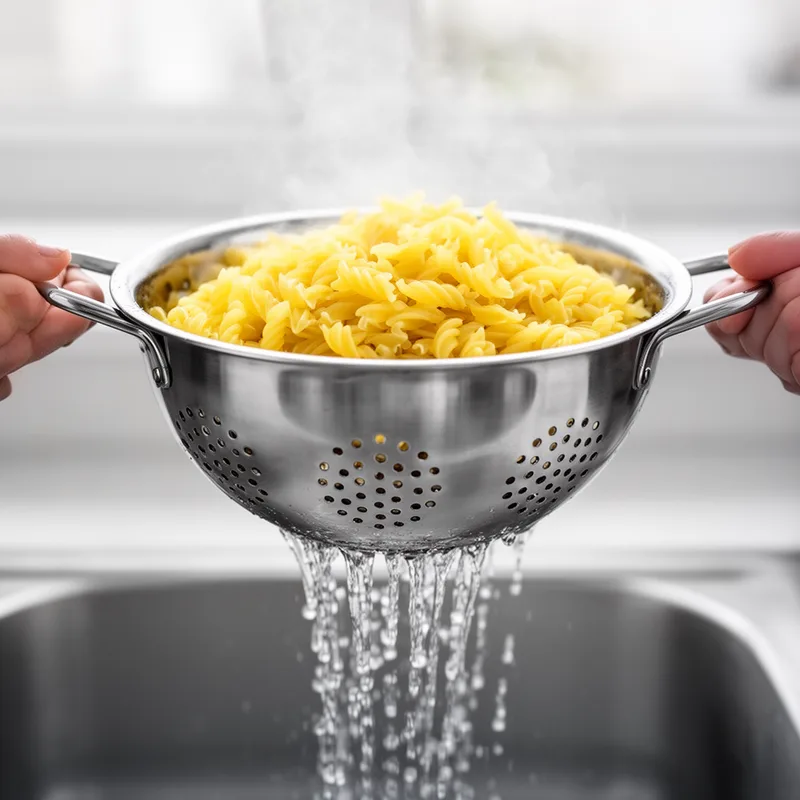
colander
 9
2.7
9
2.7

- noun
- /ˈkɒləndər/
- To separate the pasta from the water, you should use a colander in the sink.
- colander to drain
- colander; rinse
- colander in the sink
Loading YouTube…
Watch on YouTubeUse a colander with bigger holes or no holes and, and make sure you just don't put too much water in there.
- Use a colander with bigger holes or no holes and, and make sure you just don't put too much water in there.
Examples
-
So now that we have the beans done, we're just going to pour them into a colander here to drain off the water.
-
She placed the vegetables in a colander to remove excess water after washing them.
-
At this point, we'll take the seed and strain it in a colander to remove the excess water.
-
Now she stopped, still holding the colander under the running faucet, and turned to her husband.
Fiction book (1991) -
When the potatoes are done, drain them in a colander in your sink.
Blog text (24) -
Pour the kale into a colander and run it under cold water.
Blog text (24) -
"I'll pour them into the colander for you," he said to Netta.
Fiction book (1992) -
When the apples lost their crispness, my mother would get out her special colander.
Fiction book (1997) -
To rinse, pour through a colander and rinse with cool water.
Blog text (16) -
After boiling the spaghetti, we poured it into a colander to drain the water.
Synonyms
 3
1.4
3
1.4
A tool like a spoon or knife that people use in the kitchen to prepare food
 1
2.4
1
2.4
A device that removes liquid, for example from washed food

A bowl with holes used to wash or drain food like vegetables and pasta

A kitchen tool that removes solid pieces from liquid when making or serving soup
How Fine

Surface Forms
Etymology
Colander comes from the old Latin verb colare, which means 'to strain'. The same root appears in percolate, and that helps explain why a colander is a bowl with holes used to drain or 'strain' water from food.