
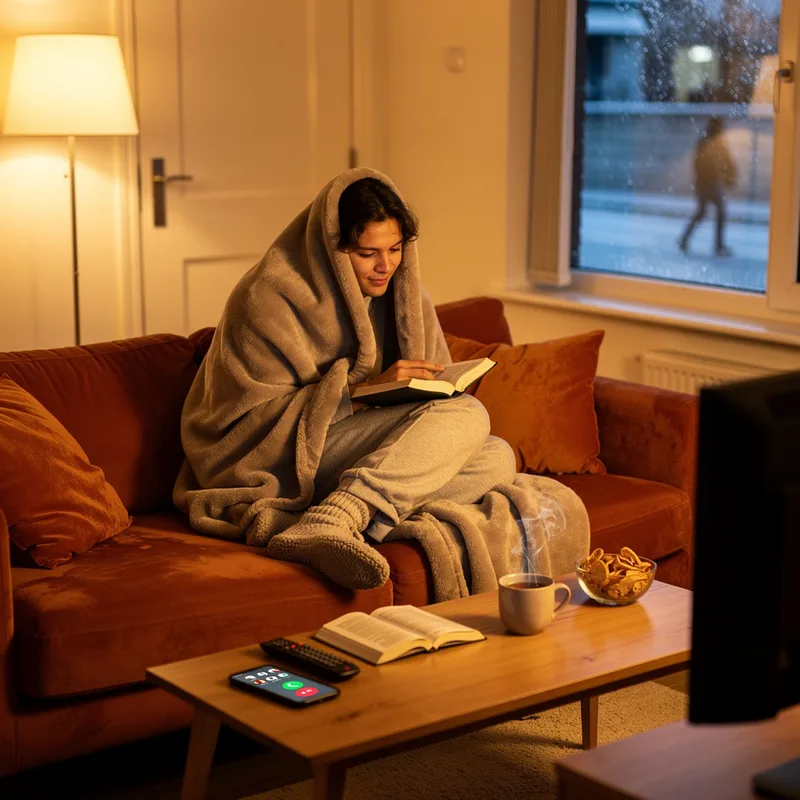
cocooning
 1
6.8
1
6.8

- noun
- /kəˈkuːnɪŋ/
- During the pandemic, many people turned to cocooning as a way to find comfort and avoid stress from the outside world.
- cocooning era
Loading YouTube…
Watch on YouTubeSo it was going from nesting to burrowing to cocooning.
- So it was going from nesting to burrowing to cocooning.
- And So what I would, what I would suggest is self-care in this time of cocooning, you know, don't use this time to feed your mind, you know, just negative stuff all the time.
- And she predicted something called cocooning, right?
Examples
-
On the one hand, there is the switching to heavier coats, cocooning, even mourning, and the urge to hibernate or hide.
Blog text (20) -
Cocooning allows individuals to relax and rejuvenate without the pressures of outside social interactions.
-
So, the cocooning dynamics are profound.
Blog text (16) -
And I think, you know, it's it's this is where the cocoon the your four walls as a family really, really matters.
-
And So what I would, what I would suggest is self-care in this time of cocooning, you know, don't use this time to feed your mind, you know, just negative stuff all the time.
-
"Cocooning" is the phrase market researchers coined to describe this tendency for families to stay closer to home for dining, entertaining, and working, and all these trends were developing before September 11, but accelerated after the attacks.
Academic text (2005) -
She enjoys cocooning on weekends, spending time reading and watching movies in the comfort of her living room.
Synonyms

A way of living that prefers staying at home for comfort instead of going out
Antonyms

How Homebound


Surface Forms
Morphology
Etymology
Cocooning comes from cocoon, the soft silk case a caterpillar makes 'to become a butterfly' and to keep itself safe and warm. So, cocooning means wrapping yourself at home for comfort and protection, staying inside to relax or avoid stress.