
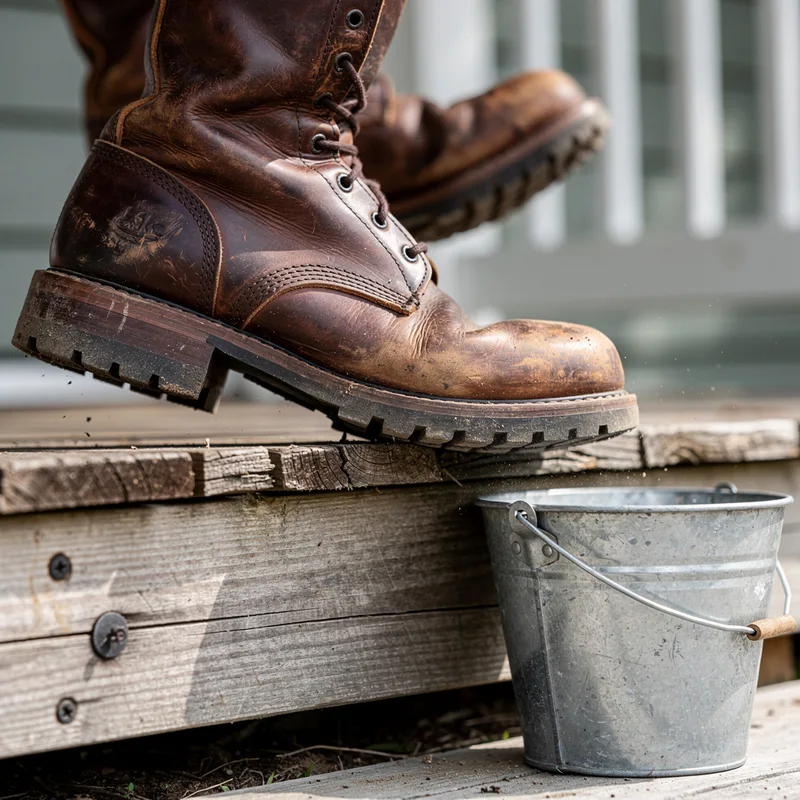
to clunk
 4
6.5
4
6.5

- verb
- /klʌŋk/
- The stone clunks against the basket rim and drops to the grass.
- clunked her head
- the door clunked
- clunked on the floor
Examples
-
You always knew where he was, clunking down the hall to the bathroom at night, all his weight on his heels.
Fiction book (1999) -
His lunch box clunked as he set it on the kitchen table.
Fiction book (1998) -
We could hear the clunk, clunk as he lined up bottles at the side of the bed.
Fiction book (2000) -
As he reads the note, something else falls out of the envelope and clunks to the ground.
Fiction book (1996) -
My dart took off, missed the board entirely, and clunked to the floor.
Fiction book (1992) -
On cue, the security lock panel goes dark and the door clunks ajar.
Fiction book (1993) -
Granddad clunked down his mug and patted his pockets to make sure the beers were still there.
Fiction book (1995) -
Her bag rasped along the wall of the staircase, and the case clunked on the wrought iron banister.
Fiction book (1996) -
As the horse trotted down the path, we could hear its hooves clunk against the cobblestones.
-
He accidentally clunked the heavy box against the wall while trying to move it.
Synonyms
 6
6.7
6
6.7
To put something down so it makes a noise or to pay money quickly
 4
7.5
4
7.5
To walk with heavy, noisy steps that make a loud sound
 2
3.5
2
3.5
To make a heavy, dull sound when something hits or falls
 2
4.9
2
4.9
To walk with heavy, clumsy, noisy steps


 1
7.4
1
7.4
To make a sound like horse hooves when moving
 1
7.1
1
7.1
To move with a dull thud, as when a horse's hooves hit the ground
 1
9.0
1
9.0
To hit something so it makes a dull heavy sound
 1
8.3
1
8.3
To hit something so it makes a dull, heavy sound
How Loud

Surface Forms
Etymology
Clunk is a word that copies a heavy, dull sound, like a toolbox falling or boots hitting wood, and is similar to clank or clomp. So, to clunk means 'to make or move with a dull, heavy sound', which is why we say a car 'clunked' when its parts hit hard.