
close order


 1
7.4
1
7.4
- noun
- Specialized
- Infantry in close order that stands its ground can resist cavalry.
- close order formation
Examples
-
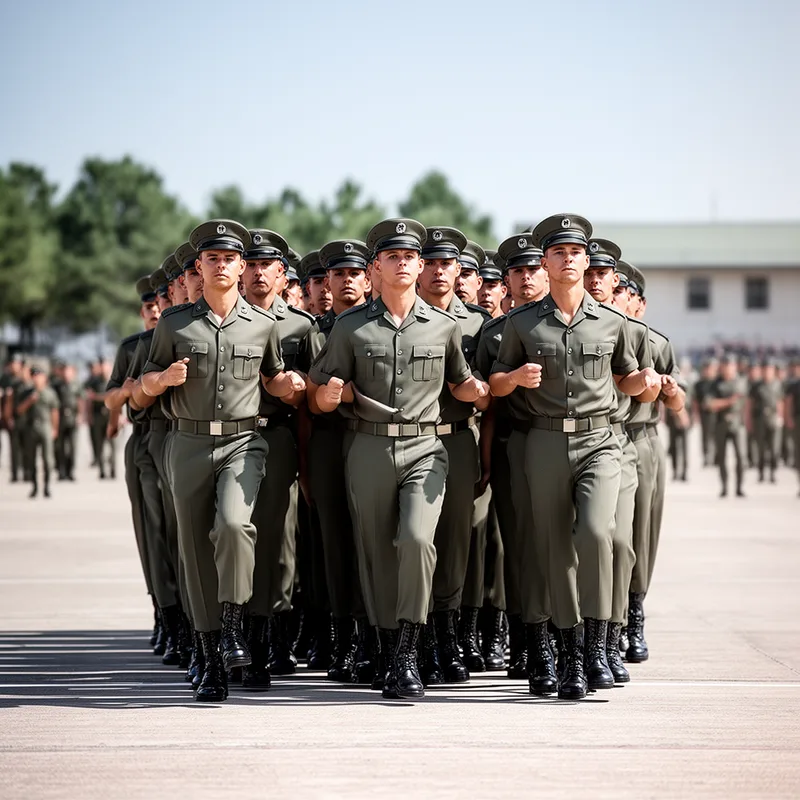
During the ceremony, the battalion moved together in close order, showcasing their training and coordination.
-
There were five or six marching bands and Destiny's Child on stage doing crotch grabs and a U.S. drill team doing a close-order drill.
Blog text (19) -
In the Naboleonic Wars, infantry fought in close order, packed together, standing shoulder to shoulder.
-
In the Napoleonic Wars, infantry fought in close order, packed together, standing shoulder to shoulder.
-
However, this ordering appears to have little resemblance to the European system of close-order drill.
Academic text (1992) -
The Aztecs, for their part, although disciplined and ordered in their own units, had neither the effective close-order formations of the Spanish nor any consistent method of preventing the Spanish cavalry from operating at will, at least on the open battlefield.
Academic text (1992) -
In essence, the Spanish infantry, with their close-order formations and sword and shield-armed troops, were able to survive the initial contact and penetrate Aztec units, or at least to stand their ground.
Academic text (1992) -
Formations were also ragged because, during the early stages of the war, the armies lacked experienced officers and noncommissioned officers to command and control close-order formations in intricate maneuvers.
Academic text (1991) -
The soldiers marched in close order, demonstrating their precision and discipline during the inspection.
-
For the big parade, the troops stood in close order to display their unity and readiness.
Synonyms
 1
4.8
1
4.8
A group of soldiers who move in a set pattern to fight
How Close

Surface Forms
Morphology
The meaning is partly derivable because 'close' (closely packed) combined with 'order' understood as an 'arrangement' yields the idea of troops arranged closely. However, 'order' is often known by learners primarily as 'a command' and the phrase is a technical military term, so the specific formation sense may not be fully predictable without prior exposure.
Etymology
Close order comes from the sight of soldiers standing very close together in neat lines before a march. The word close means 'near' and order means 'lines', so the phrase came to mean a tight marching 'formation'.