
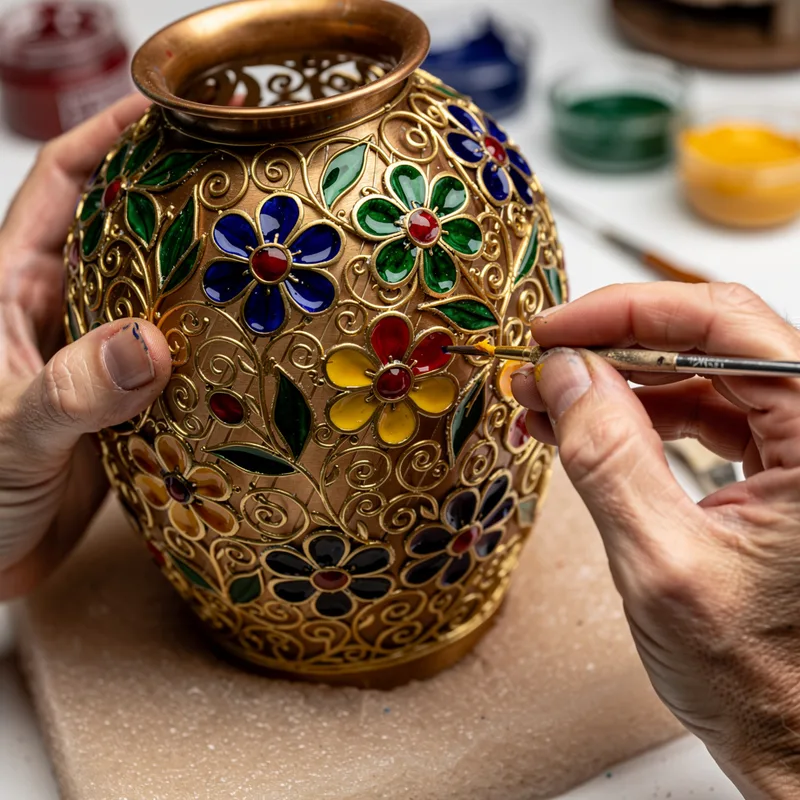
cloisonné
- noun
- /klwɑːzəˈneɪ/
- Specialized
- A series of cases explained artistic techniques such as watercolor, wood and ivory carving, cloisonné, and Japanese printmaking and lacquer.
- cloisonné enamel
- cloisonné box
- cloisonné vase
Examples
-
To rid herself of earthly desires, she gave away her favorite doll and a cloisonné brooch that Aunt Lalie had brought her from China.
Fiction book (1990) -
Idly picking up a cloisonné letter opener, he ran his thumb along the blunt edge for what seemed a long moment.
Fiction book (1990) -
Lois handed her a cloisonné lighter from a trip to China.
Fiction book (1999) -
Flowers filled cloisonné vases on wooden tables; we walked on nonmetabolic carpet, probably real wool, deep green with white floral insets.
Fiction book (1993) -
"I have no intention of dragging you into this." Resigned, Sybill reached into her purse and found the small cloisonné box she used to store aspirin.
Fiction book (1999) -
The two-foot-high cloisonné figure with its scarlet toenails and purple trunk looked cheerfully ridiculous standing next to Rain's Zen rock garden.
Fiction book (1996) -
The artist showcased her beautiful cloisonné vase, featuring intricate designs separated by delicate metal strips.
-
At the gallery, the cloisonné pieces captivated visitors with their vibrant colors and unique compartmentalized patterns.
-
The antique shop had a stunning cloisonné box that was perfect for storing jewelry or other small treasures.
Surface Forms
Etymology
Cloisonné comes from the French root cloison, meaning 'partition' or 'compartment', and you can think of it like the English word 'enclose'. The term describes the technique of making tiny metal walls to hold bright enamel, so cloisonné is the art of filling those small separated areas with color.

