
cleistogamy
- noun
- /ˌklaɪstəˈɡæmi/
- Specialized
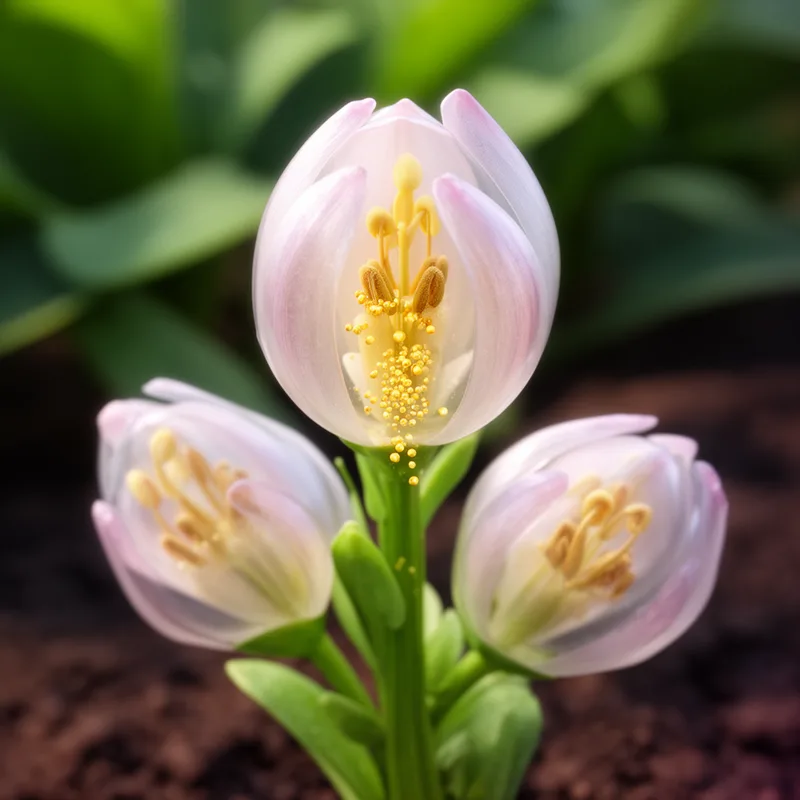
- Cleistogamy allows plants to reproduce successfully even in unfavorable conditions when their flowers do not open.
Examples
-
In cleistogamy, the flowers are small and tight, which means they remain closed during fertilization.
-
The garden features several plants that produce cleistogamy, ensuring they self-pollinate without relying on external pollinators.
-
Both cleistogamy and selling predictably lead to genetic uniformity.
Academic text (1996) -
However, species of Callitriche have unisexual flowers and lack perianth; thus, cleistogamy in the usual sense is not possible.
Academic text (1996) -
Sculthorpe (1967) considered cleistogamy (pollination within closed, often submerged flowers) as "an evasion of the problems of elevating flowers above the water surface."
Academic text (1996) -
In this context, we revisit a question similar to that encountered in the discussion of vegetative reproduction: Have selling reproductive systems evolved in aquatic plants because of selection for genetic uniformity, or has selection for cleistogamy and selling inevitably resulted in genetic uniformity?
Academic text (1996)
Surface Forms
Morphology
cleistogamy = cleisto + gamy
Formed from specialized Greek combining forms (cleisto- 'closed' + -gamy 'marriage/reproduction') that are not productive standalone English words, so learners cannot reliably infer the meaning from the pieces.
Etymology
Cleistogamy comes from the Greek parts kleistos meaning 'closed' and gamos meaning 'marriage', the same root as in monogamy. So, Cleistogamy describes flowers that stay shut and 'marry' themselves, meaning they fertilize themselves without opening.

